
Culturing microorganisms using aseptic techniqueSpec 6.1
In short
Aseptic technique is a set of procedures that prevents unwanted microorganisms contaminating a culture and stops the cultured organisms escaping. Equipment and media are sterilised, a flame creates an updraught away from the work, and plates are taped and incubated inverted at a temperature below 30 °C.
Microorganisms are grown (cultured) in a culture medium that supplies everything they need: a carbon source (such as glucose), a nitrogen source (such as amino acids or ammonium ions), mineral ions, water and sometimes growth factors such as vitamins. The medium is either a solid nutrient agar gel poured into Petri dishes, or a liquid nutrient broth in a flask or tube.
The aim of aseptic technique is to stop two things: unwanted microorganisms from the air, skin and bench entering the culture (contamination), and the cultured organisms escaping into the environment or infecting the worker.
Principles and techniques
| Technique | Reason |
|---|---|
| Sterilise media, glassware and pipette tips in an autoclave (steam at 121 °C under pressure for at least 15 minutes) before use | Kills all microorganisms, including heat-resistant spores, so only the organism being studied grows |
| Wipe the bench with disinfectant and wash hands before and after | Removes microorganisms that could contaminate the culture or infect the worker |
| Pass the neck of a bottle or tube and the inoculating loop through a Bunsen flame; heat the loop until red hot and let it cool before use | Kills microorganisms on the surfaces; the flame creates an updraught of air that carries airborne microorganisms away from the opening; a cool loop does not kill the culture being transferred |
| Keep lids on, lifting the Petri dish lid only slightly and only for as long as needed | Reduces entry of airborne microorganisms |
| Seal the lid with two or four short strips of adhesive tape, not all the way round | Stops the lid being removed accidentally, but still lets oxygen in, so anaerobic pathogens are not selected for |
| Incubate plates upside down (inverted) | Condensation collects in the lid and cannot drip on to the agar and spread the colonies |
| Incubate at 25 °C in schools and colleges (not above 30 °C); commercial and clinical work often uses 37 °C | Slower growth of human pathogens, which grow best at body temperature, is safer |
| Autoclave or disinfect all used cultures and equipment before disposal | Prevents release of microorganisms |
Inoculating a plate
- Sterilise the inoculating loop in a flame until red hot, then let it cool for a few seconds near the flame.
- Remove the bottle cap with the little finger of the hand holding the loop, flame the neck of the bottle, and take a loopful of culture.
- Flame the neck again, replace the cap, then lift the Petri dish lid slightly and streak the loop gently across the agar surface (or spread a measured volume with a sterile spreader to give a lawn).
- Replace the lid, tape it, label the base with a marker pen (name, date, organism) and incubate inverted.
- Re-sterilise the loop in the flame.
Always give the reason with the technique. Marks go for 'flame the neck of the bottle to kill microorganisms and create an updraught', not just 'flame the bottle'.
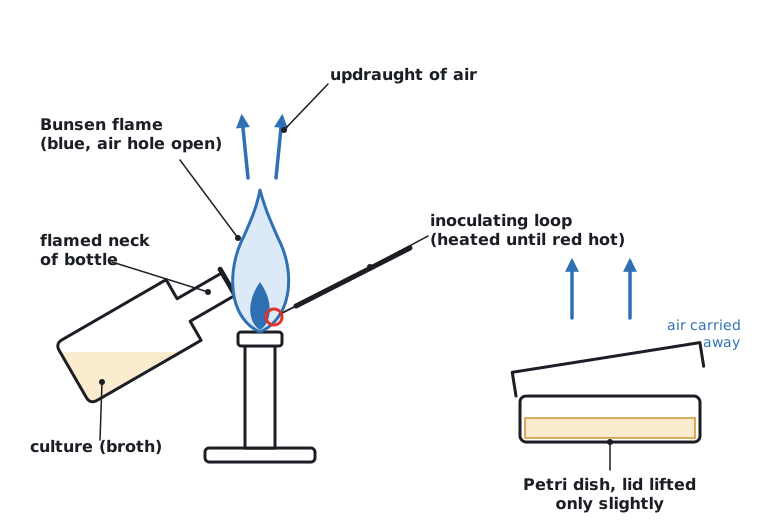 (opens full size in a new tab)
Written and checked against the Edexcel International A Level Biology (YBI11) specification · Updated October 2026