
Monohybrid inheritance and pedigree diagramsSpec 2.15
In short
Monohybrid inheritance is the inheritance of one gene with two alleles. A genetic cross between two heterozygotes gives a 3 : 1 ratio of dominant to recessive phenotypes. A pedigree diagram shows the phenotypes of family members over generations, and can be used to deduce whether an allele is dominant or recessive.
A monohybrid cross looks at the inheritance of one gene. Each parent makes gametes containing one allele of the gene (as a result of meiosis), and the alleles combine at random when gametes fuse at fertilisation.
A cross between two heterozygotes
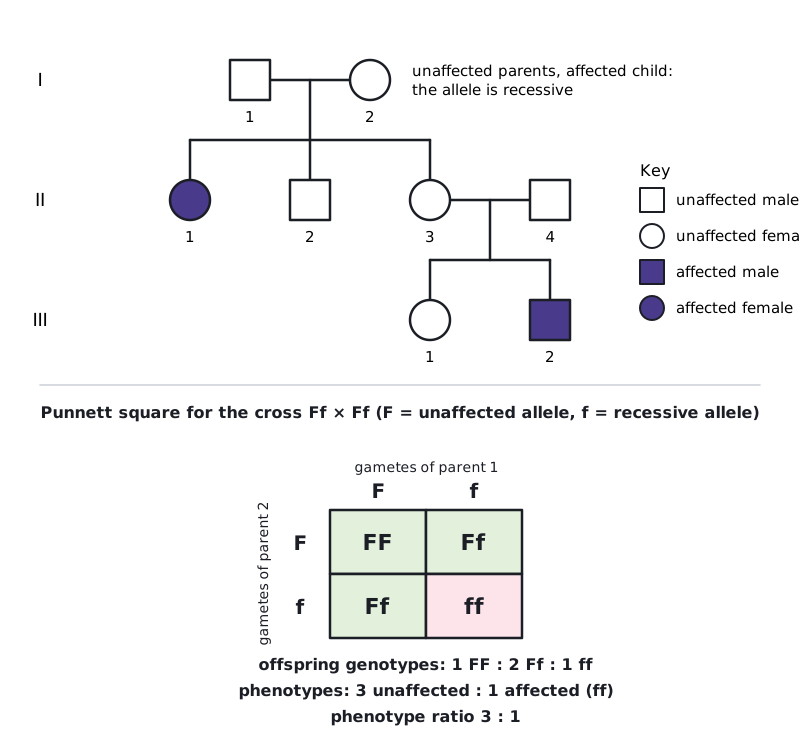
Cystic fibrosis is caused by a recessive allele, f. Two parents are both heterozygous (Ff). Draw a genetic diagram, and find the probability that a child has cystic fibrosis.
- Parent genotypes: Ff × Ff.
- Gametes: F or f from each parent.
- Possible offspring: FF, Ff, Ff, ff (Punnett square).
- Phenotypes: FF and Ff do not have the condition (3), ff has cystic fibrosis (1).
Answer: Ratio 3 : 1 (unaffected : affected). Probability of a child with cystic fibrosis is 1 in 4 (25 %).
Pedigree diagrams
A pedigree diagram shows the phenotypes of family members across generations. Males are usually drawn as squares and females as circles; shaded symbols show people with the condition; horizontal lines join parents and vertical lines lead to their children.
| Clue in the pedigree | Conclusion |
|---|---|
| Two unaffected parents have an affected child | The condition is caused by a recessive allele, and both parents are heterozygous carriers. |
| Two affected parents have an unaffected child | The condition is caused by a dominant allele, and both parents are heterozygous. |
| Every affected person has an affected parent | Suggests a dominant allele. |
| Condition skips generations | Suggests a recessive allele. |
To prove that an allele is recessive, find a pair of unaffected parents with an affected child, and say so, naming the individuals. To prove dominant, find affected parents with an unaffected child. Give the genotypes of the individuals concerned.
 (opens full size in a new tab)
Written and checked against the Edexcel International A Level Biology (YBI11) specification · Updated October 2026