
The Meselson–Stahl experimentSpec 2.10
In short
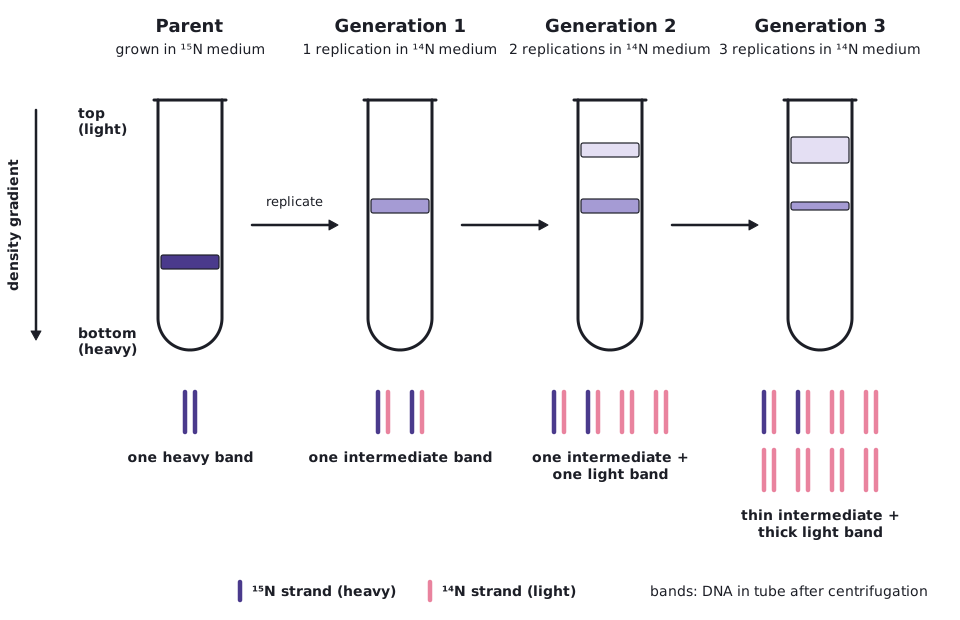
Meselson and Stahl grew bacteria in heavy nitrogen (¹⁵N), then transferred them to light nitrogen (¹⁴N) and separated their DNA by density in a centrifuge. After one generation all the DNA was of intermediate density, and after two generations half was intermediate and half light, which supports semi-conservative replication.
Three models were proposed for how DNA could be copied. In the conservative model the original molecule stays intact and a completely new molecule is made. In the semi-conservative model each new molecule has one old and one new strand. In the dispersive model, each strand is a mixture of old and new DNA.
The experiment
- Bacteria (E. coli) were grown for many generations in a medium with heavy nitrogen, ¹⁵N, so all their DNA contained ¹⁵N (heavy DNA).
- The bacteria were transferred to a medium containing only normal, lighter nitrogen, ¹⁴N, and allowed to divide. New DNA could only be made using ¹⁴N.
- Samples were taken after each generation. The DNA was extracted and spun in a centrifuge in a caesium chloride solution, which separates DNA by density into bands.
| Sample | Result observed | Conservative model | Semi-conservative model | Dispersive model |
|---|---|---|---|---|
| Start (all ¹⁵N) | One band, heavy | One heavy band | One heavy band | One heavy band |
| After 1 generation | One band, intermediate density | Two bands: heavy and light (not matching) | One intermediate band (matches) | One intermediate band (matches) |
| After 2 generations | Two bands: intermediate and light | Heavy and light bands (not matching) | Intermediate and light bands (matches) | One band, lighter than intermediate (not matching) |
After one generation, a single band of intermediate density rules out the conservative model, which would give separate heavy and light bands. After two generations, the presence of both an intermediate and a light band rules out the dispersive model, which would give a single band of lower density. Only the semi-conservative model fits both results. The new data therefore supported the accepted theory and refuted the competing theories.
In a data question, state what the band positions mean in terms of nitrogen (heavy = both strands ¹⁵N, intermediate = one ¹⁵N strand and one ¹⁴N strand, light = both strands ¹⁴N), then compare with each model's prediction.
 (opens full size in a new tab)
Written and checked against the Edexcel International A Level Biology (YBI11) specification · Updated October 2026