
Models of membrane structure and the evidence for themSpec 2.2
In short
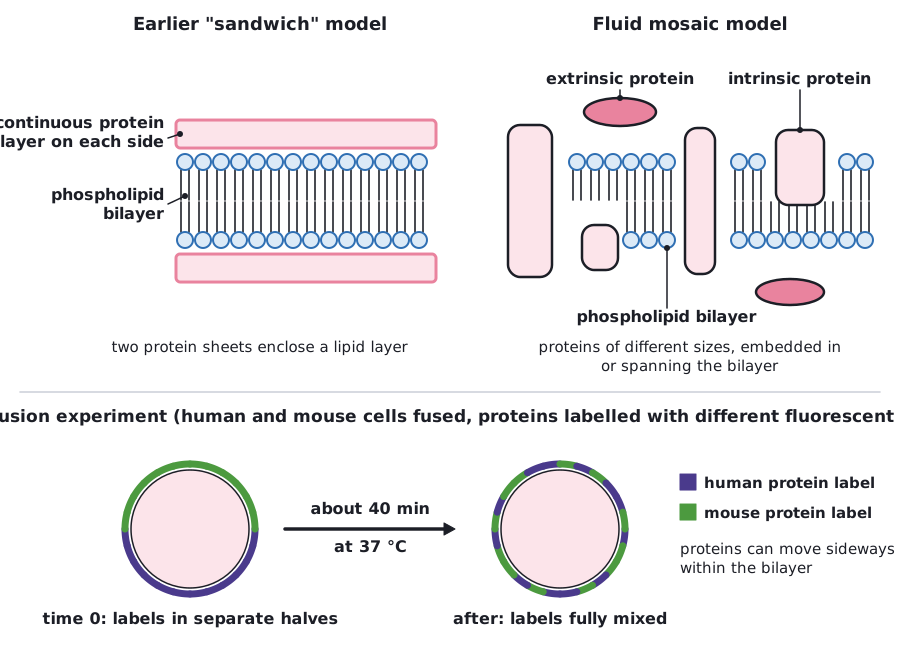
The fluid mosaic model is a scientific model of the membrane: a flexible phospholipid bilayer in which protein molecules are scattered like tiles in a mosaic and can move sideways. Like any model it is an interpretation of data, and it replaced earlier ideas when new evidence was found.
Scientists cannot see molecules in a membrane directly. A model is an explanation built from the data available. When new data do not fit, the model is changed or replaced. This is how the fluid mosaic model came to be accepted.
| Evidence | What it showed | How it was interpreted |
|---|---|---|
| Early electron micrographs of membranes | Two dark lines with a lighter band between them. | Taken to show a layer of protein on each side of a lipid layer, an early 'sandwich' model with continuous protein layers. |
| Freeze-fracture electron microscopy | Bumps (protein molecules) scattered within the lipid layers, which split apart between the two layers. | Proteins are embedded within the bilayer, and not in continuous layers on the surface. This supports the mosaic. |
| Biochemical analysis of membrane proteins | Many proteins have large hydrophobic regions and are not soluble in water. | Hard to explain if all proteins lay on the surface; consistent with proteins spanning the hydrophobic interior. |
| Cell fusion experiment: a mouse cell and a human cell fused and their surface proteins labelled with different fluorescent markers | At 37 °C the two labels mixed completely over about 40 minutes. At low temperature, mixing was greatly slowed. | Proteins can move sideways in the membrane, so the membrane is fluid. Slower movement at low temperature fits with the lipid becoming more rigid. |
The model is named for these two ideas: the bilayer is fluid because the phospholipids and many proteins move, and mosaic because the proteins are scattered through the bilayer in a pattern like the tiles of a mosaic.
In 'how does the data support the model' questions: first state what the data show (with a value if the data allow), then say what that means about the membrane, then name the feature of the model it supports.
 (opens full size in a new tab)
Written and checked against the Edexcel International A Level Biology (YBI11) specification · Updated October 2026