
Estimating time of deathSpec 6.20
In short
Time since death of a mammal can be estimated from body temperature, rigor mortis, the extent of decomposition, the stage of succession of organisms colonising the body, and the age and species of insects such as blowfly larvae. Each is affected by environmental conditions, so several are used together.
| Evidence | What is looked at and why it changes with time |
|---|---|
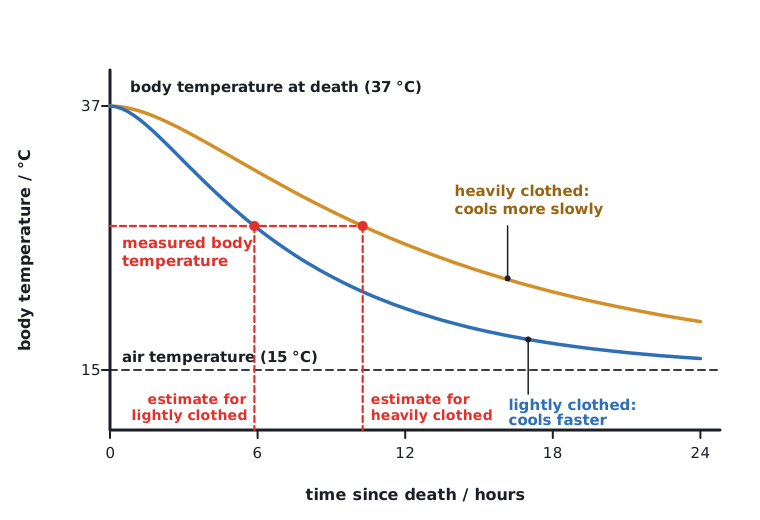
| Body temperature | After death, metabolism stops and the body cools towards the temperature of its surroundings. Core (rectal) temperature is measured and compared with 37 °C (cooling curve). Speed of cooling depends on air temperature, clothing, body mass and wind or water. Most useful in the first 24 hours or so |
| Degree of muscle contraction (rigor mortis) | No new ATP is made after death, so myosin heads cannot detach from actin and muscles stay contracted and stiff. It starts in smaller muscles in the face a few hours after death, spreads, and passes off after about 1 to 2 days as muscle proteins are broken down by enzymes. Warm conditions make it start and end sooner |
| Extent of decomposition | Bacteria in the gut, and enzymes from dead cells (autolysis), digest tissues. In sequence the body shows discolouration, bloating due to gases, softening and liquefaction of tissues and finally dry remains and bones. Slower in cold, dry or burial conditions |
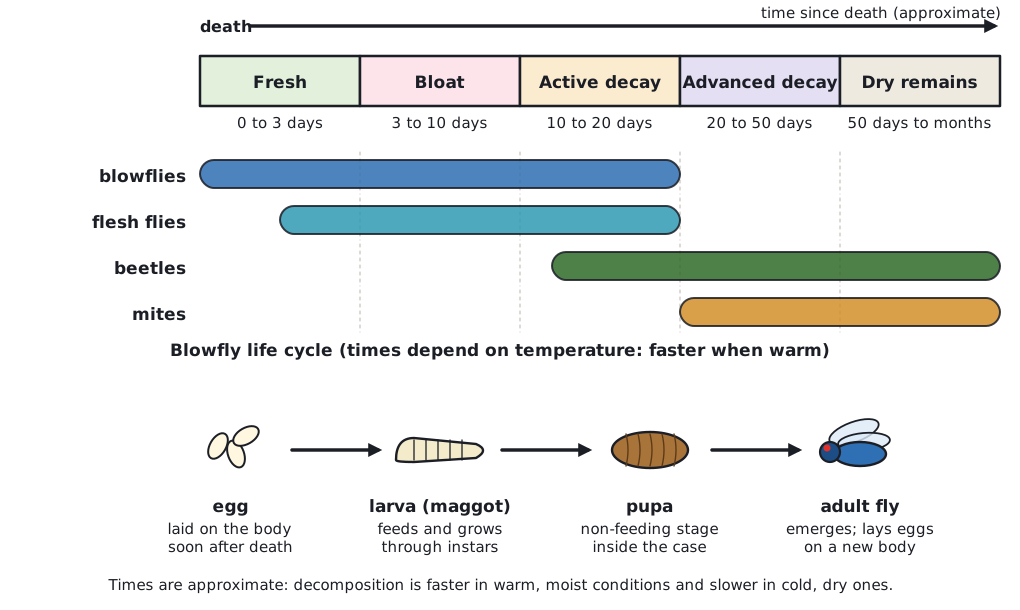
| Stage of succession | Organisms colonise a body in a sequence as its condition changes: blowflies arrive within minutes to hours, then flesh flies, then beetles that feed on drier tissue, later mites and species that feed on hair and bone. The community present shows the stage of decay |
| Forensic entomology | Blowflies lay eggs on a body, which hatch into larvae (maggots), grow through stages (instars), pupate and emerge as adults. Species and size of the oldest larvae, or the stage of pupae, give the time since the eggs were laid, allowing for temperature (growth is faster when warm). Eggs are laid only after death, so the age of the oldest larvae gives a minimum time since death |
Each method is only an estimate, and the earlier the body is found, the smaller the error. Conditions such as air temperature, burial, water, clothing and whether the body is indoors alter all of the changes. A forensic scientist therefore uses evidence from more than one method, records the environmental conditions at the scene and takes samples of insects at once.
Always say what changes and why: 'rigor mortis occurs because ATP is no longer produced, so myosin heads cannot detach from actin'. For succession, say that different species arrive as the condition of the body changes.
 (opens full size in a new tab)
 (opens full size in a new tab)
Quick check
How do saprotrophs digest dead matter?
Show answer
They secrete extracellular enzymes on to it and absorb the soluble products.
Why is Taq polymerase used in PCR?
Show answer
It is heat-stable, so it is not denatured at about 95 °C and works at 72 °C.
Why do shorter DNA fragments travel further in gel electrophoresis?
Show answer
They move more easily through the mesh of the gel.
What is an STR?
Show answer
A short tandem repeat: a short sequence of non-coding DNA repeated many times, with a different number of repeats in different people.
Why does rigor mortis happen?
Show answer
ATP is no longer made, so myosin heads cannot detach from actin and muscles stay contracted.
Written and checked against the Edexcel International A Level Biology (YBI11) specification · Updated October 2026