
GibberellinsSpec 8.11
In short
Gibberellins are plant growth substances that stimulate stem elongation and seed germination. In a germinating cereal grain, the embryo releases gibberellin, which switches on transcription of the amylase gene in the aleurone layer. Amylase digests starch to sugars that the embryo respires and uses to grow.
Gibberellins are plant growth substances made in young leaves, shoot tips and embryos. They stimulate stem elongation, partly by promoting cell elongation and cell division, and trigger germination of seeds. Dwarf varieties of plants often make little gibberellin.
Germination of a cereal grain (such as barley)
- The seed absorbs water and the embryo releases gibberellin.
- Gibberellin diffuses to the aleurone layer, the outer layer of the endosperm, and binds to a receptor.
- This causes breakdown of a repressor protein that normally stops transcription factors working, so the transcription factors can bind to the amylase gene and switch it on. Gibberellin therefore acts at the level of transcription.
- The gene is transcribed and translated, so amylase is made and secreted into the endosperm.
- Amylase hydrolyses starch in the endosperm to maltose, which is converted to glucose.
- Glucose is transported to the embryo and used in respiration, releasing ATP for growth, and as a source of carbon for cellulose.
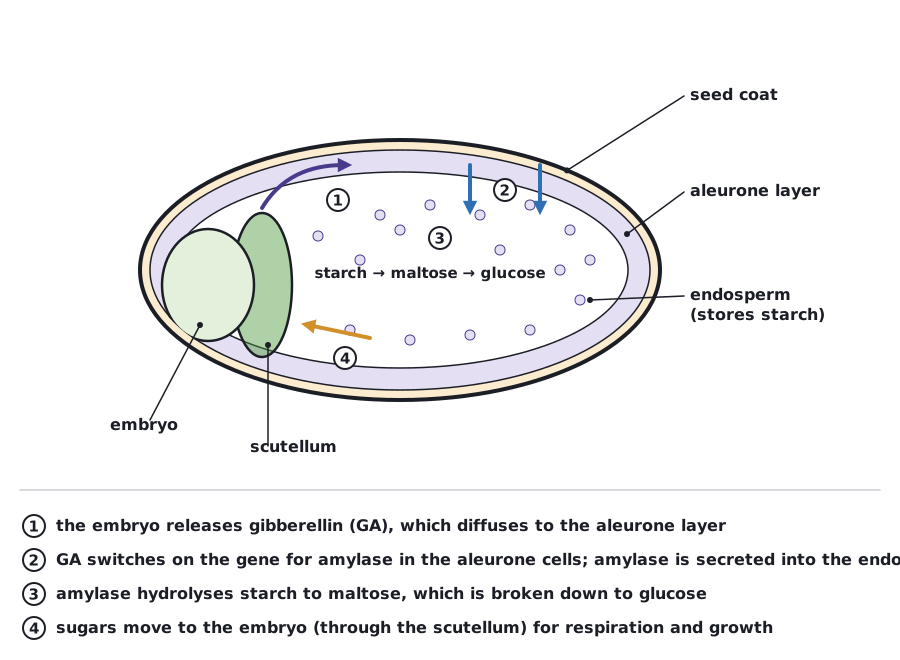 (opens full size in a new tab)
A full answer links hormone, target cell, gene and enzyme: gibberellin, aleurone layer, transcription of the amylase gene, starch digestion.
Written and checked against the Edexcel International A Level Biology (YBI11) specification · Updated October 2026