
Amplifying DNA by the polymerase chain reactionSpec 6.17
In short
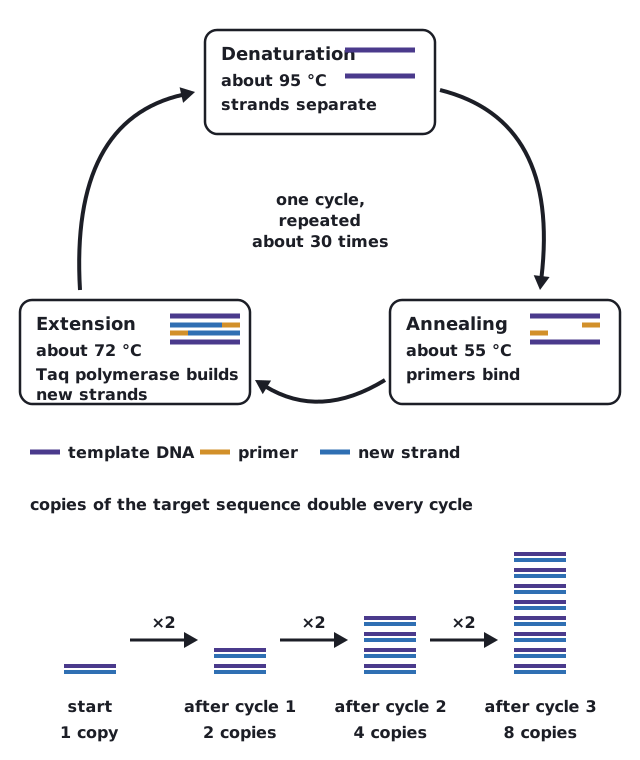
The polymerase chain reaction amplifies a DNA sequence in a thermal cycler. Each cycle has denaturation at about 95 °C, annealing of primers at about 55 to 65 °C and extension by Taq polymerase at about 72 °C. The number of copies doubles each cycle.
The polymerase chain reaction (PCR) makes millions of copies of a particular piece of DNA from a very small sample, such as a hair root at a crime scene. The tube contains:
- the DNA template (the sample)
- two primers: short single-stranded DNA sequences complementary to the start of each strand of the target sequence
- free DNA nucleotides (dATP, dTTP, dCTP, dGTP)
- Taq polymerase, a DNA polymerase from the bacterium Thermus aquaticus that is heat-stable and so is not denatured at 95 °C
- a buffer solution with magnesium ions
- Denaturation: heat to about 95 °C. Hydrogen bonds between the complementary base pairs break, separating the two strands.
- Annealing: cool to about 55 to 65 °C. Primers bind (anneal) by hydrogen bonds to their complementary sequences at the ends of the target DNA on each strand.
- Extension: heat to about 72 °C, the optimum for Taq polymerase. It adds free nucleotides to the 3' end of each primer, building a complementary strand, to make two double-stranded copies.
- The cycle is repeated, typically 25 to 35 times in an automated thermal cycler. The amount of DNA doubles each cycle, so after n cycles there are 2ⁿ copies of the target from each original molecule.
The primers make the technique specific for one sequence, and the use of a heat-stable enzyme means that the polymerase does not have to be added again each cycle. A very small sample can be amplified enough to be analysed. Contamination with other DNA is a risk, so great care is needed.
Amplification
How many copies of a DNA sequence would there be after 25 cycles of PCR starting from one molecule?
- The number doubles each cycle, so copies = 2ⁿ.
- 2²⁵ = 33 554 432.
Answer: About 3.4 × 10⁷ copies
 (opens full size in a new tab)
Written and checked against the Edexcel International A Level Biology (YBI11) specification · Updated October 2026