
Meiosis and genetic variationSpec 3.10
In short
Meiosis is a reduction division that produces four haploid cells, which are genetically different from each other and from the parent cell. Crossing over between chromatids of homologous chromosomes in prophase I exchanges alleles, and the random orientation of homologous pairs in metaphase I (independent assortment) gives different combinations of chromosomes in each gamete.
Meiosis is the division that makes gametes. It involves two divisions, with only one round of DNA replication beforehand, so a diploid cell (2n) produces four haploid (n) cells. The cells are not identical to each other, which is a source of genetic variation in the offspring.
- Meiosis I (reduction division): homologous chromosomes pair up. They are separated, so each daughter cell is haploid but each chromosome still has two chromatids.
- Meiosis II: the chromatids of each chromosome are separated, as in mitosis. Four haploid cells result.
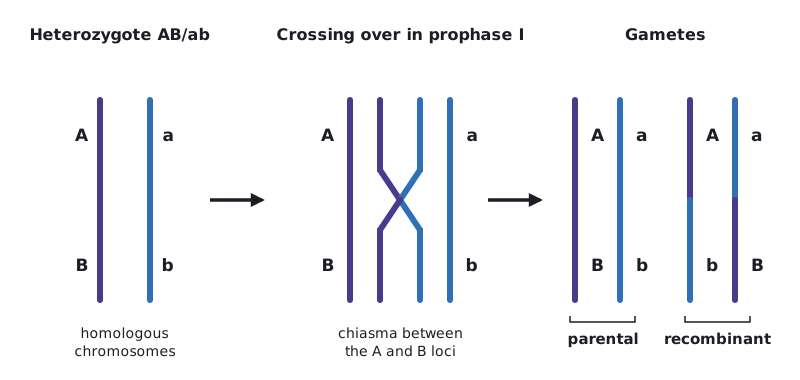
Crossing over in prophase I
Homologous chromosomes pair up to form a bivalent. Chromatids of the two homologous chromosomes (non-sister chromatids) break and rejoin at points called chiasmata, exchanging sections of DNA. This swaps alleles between the chromatids, so each chromatid now carries a new combination of alleles. (The names of the stages of prophase are not required.)
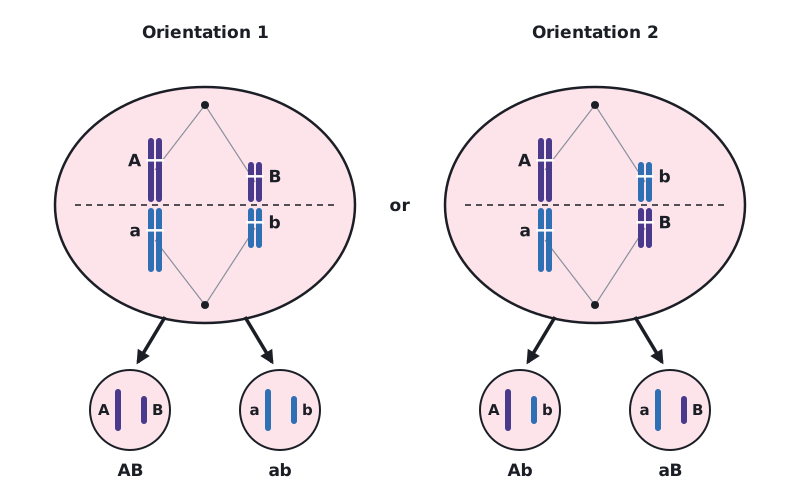
Independent assortment in metaphase I
In metaphase I, the bivalents line up on the equator of the cell. Each pair lines up independently of the others, and the maternal or paternal chromosome of each pair can face either pole at random. When the homologous chromosomes separate in anaphase I, the cells receive a random mixture of maternal and paternal chromosomes. This is independent assortment.
In humans n = 23, so independent assortment alone can produce 2²³ = 8 388 608 different combinations of chromosomes in the gametes of one person, before crossing over is taken into account. Crossing over adds more variation. Variation is also increased because fertilisation is random, so any sperm may fertilise any egg.
 (opens full size in a new tab)
 (opens full size in a new tab)
Crossing over is between non-sister chromatids of homologous chromosomes. Independent assortment is the random orientation of whole homologous pairs in metaphase I, not the separation of chromatids.
Written and checked against the Edexcel International A Level Biology (YBI11) specification · Updated October 2026