
PhytochromeSpec 8.11
In short
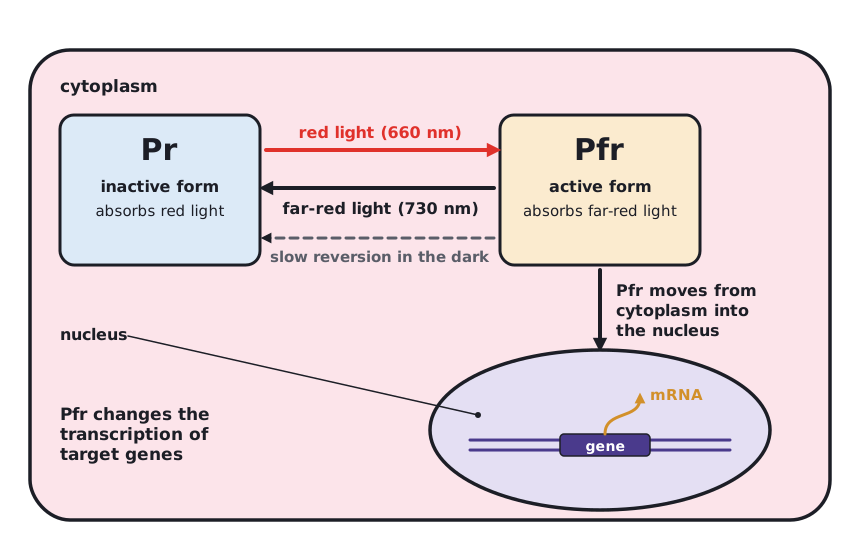
Phytochrome is a light-sensitive plant pigment that exists in two forms. Red light converts the inactive form Pr to the active form Pfr, and far-red light converts Pfr back to Pr. Pfr moves into the nucleus and alters transcription of genes, controlling responses such as germination, stem elongation and flowering.
Phytochrome is a pigment protein that allows plants to detect the amount and quality of light, and the length of day and night. It exists in two interconvertible forms:
| Form | Absorbs | Converted to | Activity |
|---|---|---|---|
| Pr | Red light (wavelength about 660 nm) | Pfr | Inactive |
| Pfr | Far-red light (wavelength about 730 nm) | Pr (also slowly in the dark) | Active |
In sunlight there is more red than far-red light, so most phytochrome is in the active Pfr form. Under the shade of leaves, which absorb red light, far-red light dominates and Pfr is converted to Pr.
 (opens full size in a new tab)
Effect on transcription: active Pfr moves from the cytoplasm into the nucleus. There it interacts with transcription factors, proteins that control whether RNA polymerase can transcribe particular genes. This switches some genes on and others off, so the plant makes different proteins and the response changes.
- Germination: in light-requiring seeds, red light and Pfr stimulate germination; far-red light inhibits it, so seeds buried too deep or in shade stay dormant.
- Stem elongation: in shade, low Pfr lets stems elongate rapidly towards the light; in light, Pfr inhibits elongation, giving short, sturdy shoots with expanded leaves.
- Flowering: short-day plants flower only when the night is longer than a critical length, and long-day plants only when it is shorter. A flash of red light in the night prevents flowering in a short-day plant, but a following flash of far-red light cancels the effect.
Do not say that Pfr is ‘made by’ far-red light. Red light converts Pr to Pfr. Link Pfr to transcription factors and gene expression to gain the mark for ‘effect on transcription’.
Written and checked against the Edexcel International A Level Biology (YBI11) specification · Updated October 2026