
Measuring biodiversity: species richness and heterozygosity indexSpec 4.17
In short
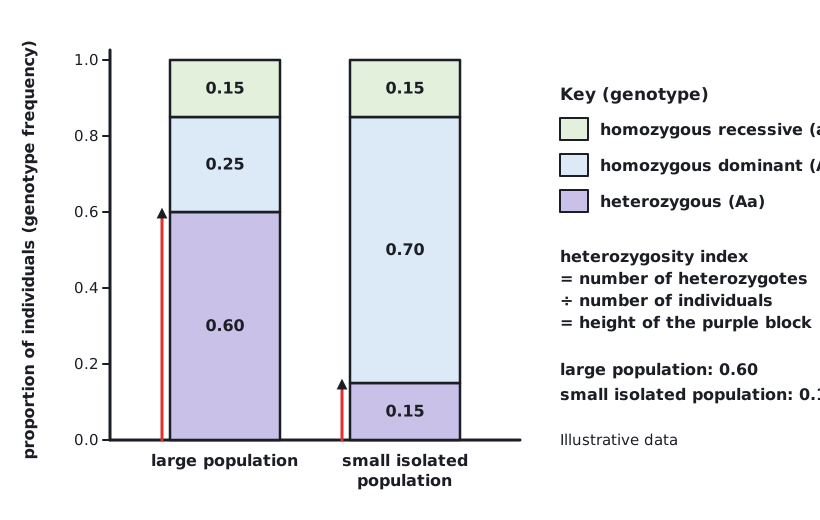
Species richness is the number of different species in a habitat, measured by sampling. Genetic diversity within a species is measured with the heterozygosity index, which is the number of heterozygotes divided by the number of individuals in the population. A higher value means more genetic diversity and a population better able to adapt.
Species richness
Species richness is the number of different species in a habitat. It is found by sampling (for example with quadrats, transects or pitfall traps), identifying each species and counting how many species there are. It is simple, but it takes no account of how many individuals there are in each species. A habitat with 10 species of which 99% of individuals are one species has the same richness as one where the 10 species are equally common.
Genetic diversity: heterozygosity index
Genetic diversity is the variety of alleles within a species. One measure is the heterozygosity index, which uses the proportion of individuals in a population that are heterozygous for a gene.
The value is between 0 and 1. A value near 1 means many individuals are heterozygous and the population has high genetic diversity. A small isolated population, in which alleles are lost and relatives interbreed, has a low index.
Calculating a heterozygosity index
A sample of 80 beetles was genotyped for one gene. 30 beetles were AA, 36 were Aa and 14 were aa. Calculate the heterozygosity index.
- Heterozygotes (Aa) = 36
- Individuals in the population sample = 80
- 36 ÷ 80
Answer: 0.45
Heterozygotes are individuals with two different alleles (Aa). Do not include homozygous individuals (AA or aa) in the top line.
 (opens full size in a new tab)
Written and checked against the Edexcel International A Level Biology (YBI11) specification · Updated October 2026