
Evolution: mutation and natural selectionSpec 5.23
In short
Evolution is a change in allele frequency in a population over many generations. Gene mutation produces new alleles and variation. Natural selection then acts on this variation: individuals with advantageous alleles are more likely to survive, reproduce and pass those alleles on, so the frequency of advantageous alleles in the gene pool increases.
- Evolution
- A change in allele frequency in a population over generations.
- Allele frequency
- How common an allele is in the gene pool of a population.
- A gene mutation (a change in the base sequence of DNA) can produce a new allele. Mutations occur at random, and most are harmful or have no effect, but a few give an advantage in a particular environment.
- There is variation in the population, so individuals differ in their alleles and phenotypes.
- Organisms produce more offspring than can survive, and there is a selection pressure such as predation, disease, competition or an abiotic change.
- Individuals with the advantageous allele are more likely to survive and reproduce (natural selection).
- They pass the advantageous allele to their offspring, so the frequency of the allele increases in the next generation. Over many generations the frequency of the allele in the population changes, which is evolution.
For example, a mutation in a bacterium may give resistance to an antibiotic. When the antibiotic is used, non-resistant bacteria are killed, and resistant bacteria survive and reproduce, passing on the resistance allele. The frequency of the resistance allele in the population increases.
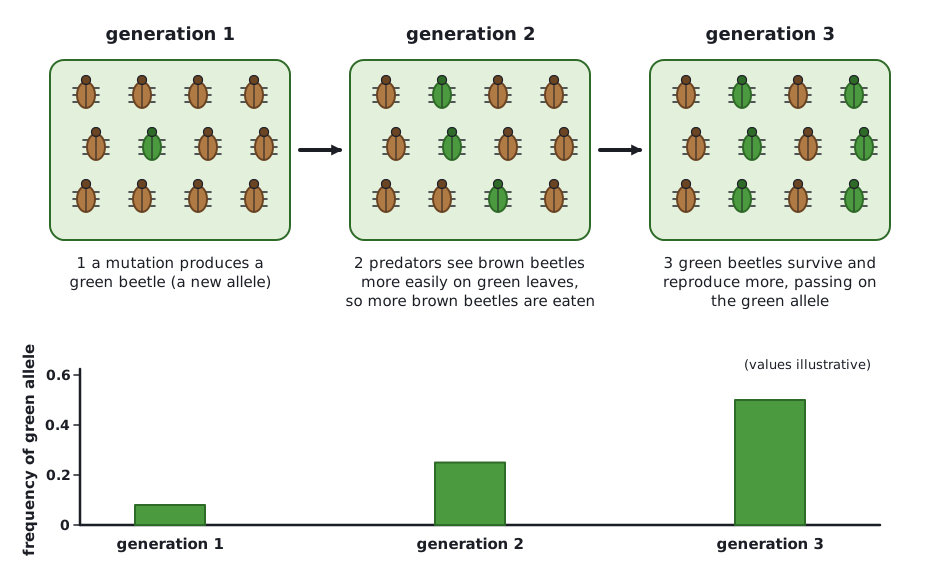 (opens full size in a new tab)
Individuals do not evolve and organisms do not mutate 'in order to' survive. Mutations are random; selection favours the individuals that happen to have the advantageous allele, and the population changes.
Written and checked against the Edexcel International A Level Biology (YBI11) specification · Updated October 2026