
Microarrays and bioinformaticsSpec 8.20, 8.21
In short
A microarray is a slide with thousands of spots of single-stranded DNA probes. mRNA from a cell is converted to labelled cDNA, which binds to matching probes; fluorescence shows which genes are active. Bioinformatics is the use of computers and software to store, analyse and interpret biological data such as DNA sequences.
Microarrays
A microarray (DNA chip) is a small slide with thousands of tiny spots in a grid. Each spot holds many copies of a single-stranded DNA probe from a known gene. It is used to find out which genes are active (being transcribed) in a tissue at a given time.
- mRNA is extracted from the cells being studied (for example cancer cells and normal cells).
- Reverse transcriptase makes cDNA from the mRNA, and a fluorescent label is added. Samples from two conditions may carry different colours.
- The labelled cDNA is added to the microarray. It binds (hybridises) to the probes with a complementary base sequence.
- Unbound cDNA is washed away and the array is scanned. A spot that fluoresces shows the gene was active; the brighter the spot, the more mRNA was present.
Microarrays can identify active genes in different tissues, compare healthy and diseased cells, and show how gene expression changes in response to a drug.
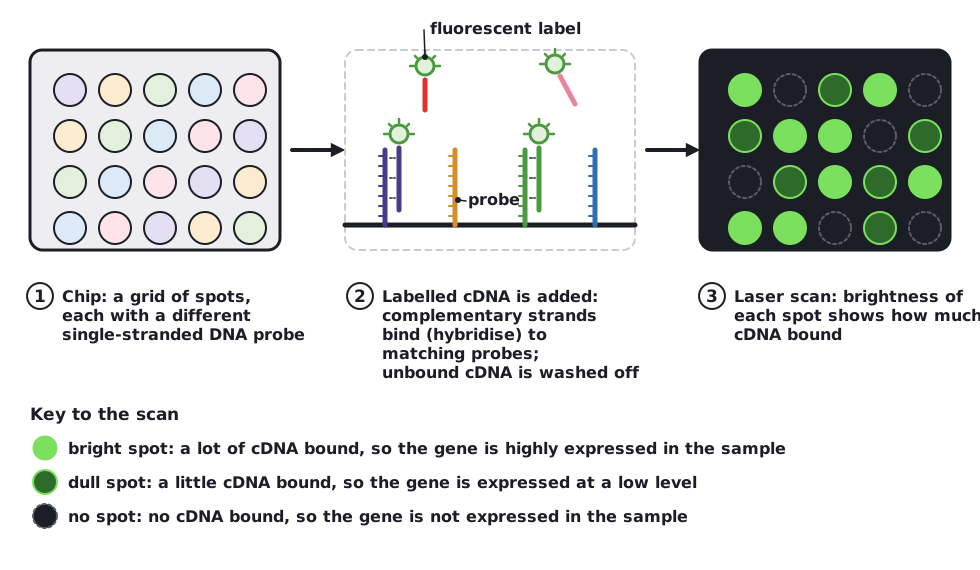 (opens full size in a new tab)
Bioinformatics
Bioinformatics is the use of computer science, mathematics and statistics to collect, store, analyse and interpret large sets of biological data, such as DNA base sequences, protein sequences and gene expression data. Computers can compare sequences in databases, find genes in a genome and compare species, and so provide a way to handle the very large amount of data produced by sequencing and microarrays.
Define bioinformatics in terms of computers and biological data. Examples help: comparing a gene sequence in a database to identify its function.
Written and checked against the Edexcel International A Level Biology (YBI11) specification · Updated October 2026