
Inserting recombinant DNA into cellsSpec 8.19
In short
Recombinant DNA must enter host cells, which are then selected using marker genes. Bacteria take up plasmids after treatment with calcium chloride and a heat shock. In plants, Agrobacterium or a gene gun delivers the DNA, and in animals it is microinjected into a fertilised egg or delivered by a virus.
| Host | Method | How it works |
|---|---|---|
| Bacteria | Heat shock with calcium chloride; electroporation | Cells are treated with ice-cold calcium chloride and heated briefly to about 42 °C, which makes the cell membrane permeable to plasmids. Electroporation uses a brief electrical pulse to the same effect. |
| Plants | Agrobacterium tumefaciens | The gene is put into the Ti plasmid of this bacterium, which naturally transfers part of its plasmid DNA into plant cells, where it is integrated into the plant genome. Whole plants are grown from the transformed cells by tissue culture. |
| Plants | Gene gun | Microscopic gold or tungsten particles coated with the DNA are fired into plant cells. |
| Animals | Microinjection | DNA is injected through a fine needle into the nucleus of a fertilised egg, which is then implanted in a surrogate mother. |
| Animals / human cells | Viral vectors or liposomes | A virus modified so it cannot cause disease carries the gene into cells; liposomes are lipid vesicles that fuse with the cell surface membrane. |
Only a small fraction of host cells take up the DNA. Marker genes are included in the plasmid so that cells that took it up can be identified. These may code for antibiotic resistance (cells that survive on agar containing the antibiotic carry the plasmid) or for a fluorescent protein such as GFP (cells glow green under UV light).
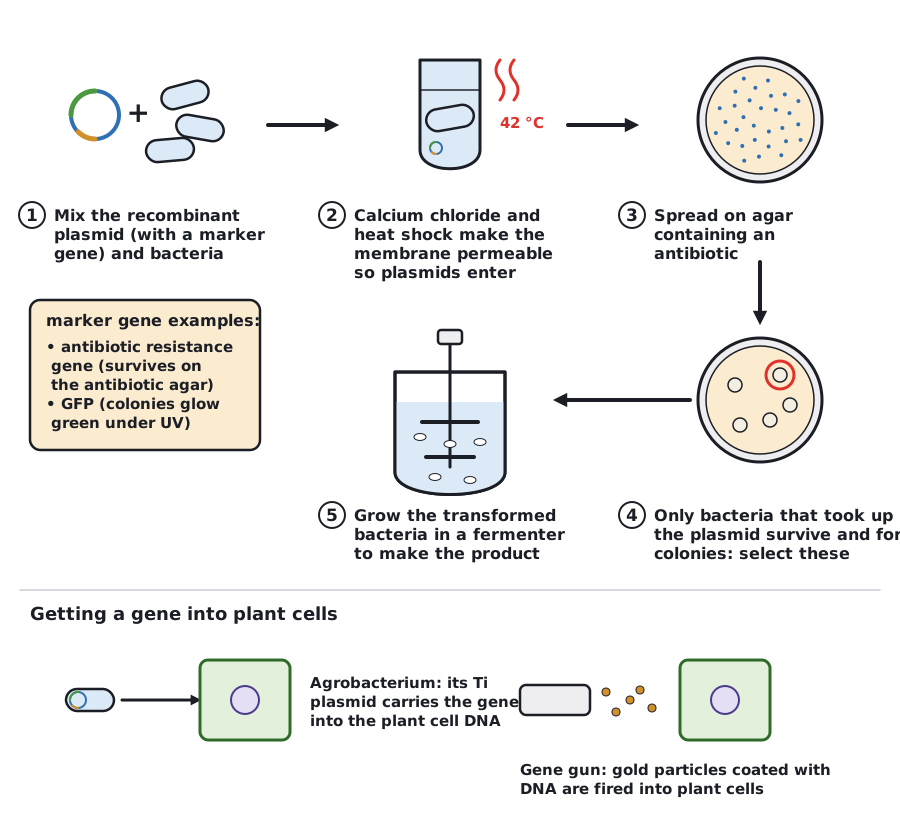 (opens full size in a new tab)
Say why a marker gene is needed: not every cell takes up the plasmid, so a marker lets you pick out the ones that did.
Written and checked against the Edexcel International A Level Biology (YBI11) specification · Updated October 2026