
Hormones and transcription factorsSpec 7.22
In short
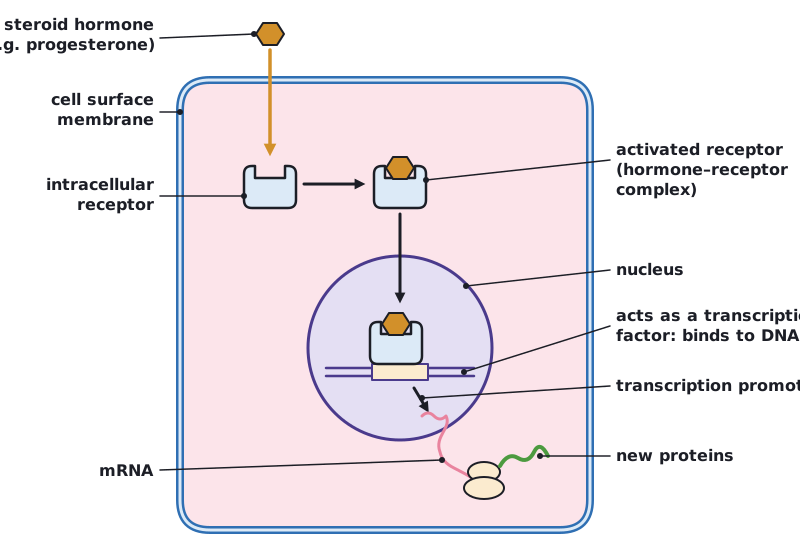
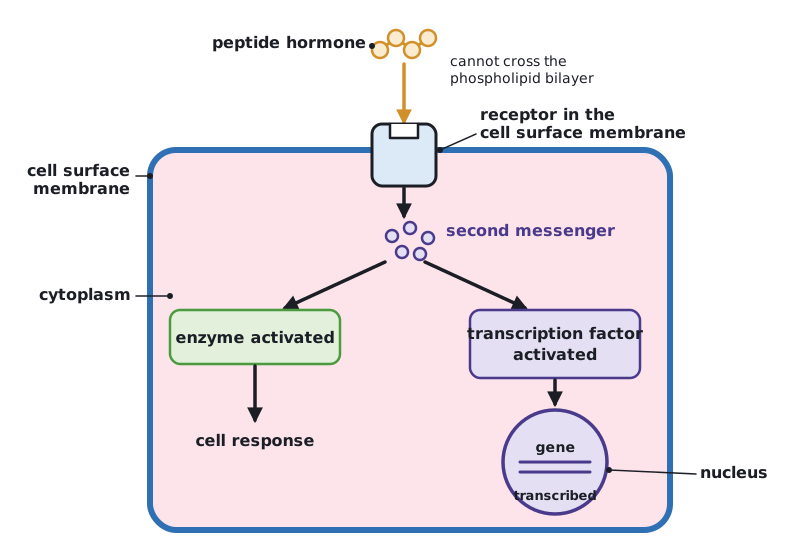
Genes are switched on and off by transcription factors, which are proteins that bind to specific DNA sequences and increase or decrease transcription. Steroid hormones are lipid-soluble, enter the cell and bind to intracellular receptors that act as transcription factors. Peptide hormones bind to receptors on the cell surface and act extracellularly through a second messenger.
Transcription factors are proteins that bind to specific base sequences on DNA, near a gene. Some (activators) help RNA polymerase bind and so switch the gene on; others (repressors) block transcription and switch the gene off. Whether a gene is expressed, and how much protein is made, depends on which transcription factors are active in a cell.
| Feature | Steroid hormones (e.g. oestrogen) | Peptide hormones (e.g. insulin, glucagon) |
|---|---|---|
| Solubility | Lipid-soluble | Water-soluble |
| Entry to the cell | Pass through the phospholipid bilayer by diffusion | Cannot pass through the membrane |
| Receptor | Inside the cell (cytoplasm or nucleus): acts intracellularly | On the cell surface membrane: acts extracellularly |
| How gene expression changes | The hormone–receptor complex acts as a transcription factor: it binds to DNA, switching a gene on (or off), so mRNA and a protein are made | Binding activates a second messenger (e.g. cyclic AMP) inside the cell, which triggers a cascade that activates or inactivates transcription factors and enzymes |
| Speed of response | Slower: protein must be made | Often quicker, because enzymes already present are altered |
Peptide hormones act without entering the cell because they cannot cross the phospholipid bilayer. Steroid hormones can, so their receptor is inside the cell.
 (opens full size in a new tab)
 (opens full size in a new tab)
Written and checked against the Edexcel International A Level Biology (YBI11) specification · Updated October 2026