
Protein transport and extracellular enzymesSpec 3.4
In short
Proteins made on ribosomes of the rough endoplasmic reticulum enter its lumen and are packaged into transport vesicles. These fuse with the Golgi apparatus, where the proteins are modified and packaged into secretory vesicles. The vesicles move to the cell surface membrane and fuse with it, releasing the protein, for example an extracellular enzyme, by exocytosis.
Proteins that are to leave the cell, such as extracellular enzymes (digestive enzymes released by pancreatic cells are an example), follow a set route through the cell.
- The gene is transcribed in the nucleus and the mRNA leaves through a nuclear pore.
- The mRNA is translated by ribosomes on the rough ER. The new polypeptide passes into the lumen of the rER, where it is folded into its three-dimensional shape.
- Small sections of rER bud off to form transport vesicles, carrying the protein to the Golgi apparatus.
- The vesicles fuse with the Golgi apparatus. Here the protein is modified (for example carbohydrate is added to make a glycoprotein, or the protein is trimmed) and sorted.
- The modified protein is packaged into secretory vesicles that pinch off from the Golgi apparatus.
- Secretory vesicles move to the cell surface membrane (along the cytoskeleton), fuse with it and release the protein outside the cell by exocytosis
The Golgi apparatus also packages hydrolytic enzymes into vesicles that remain in the cell as lysosomes. Cells that secrete a lot of protein, such as enzyme-secreting cells of the pancreas, have extensive rER and many Golgi stacks.
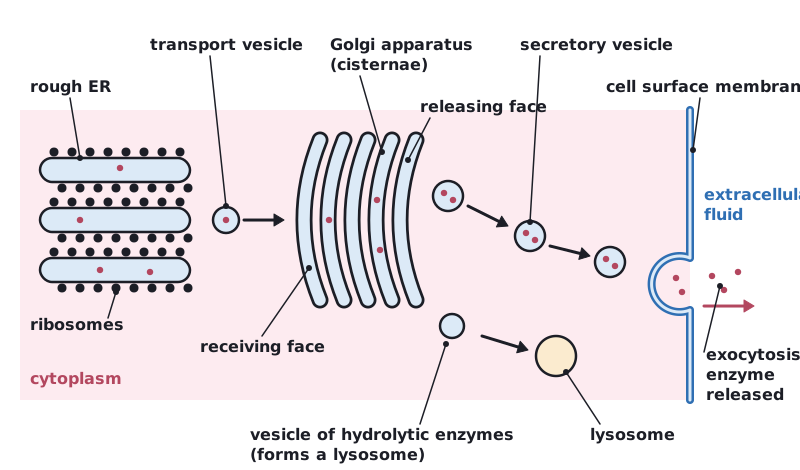 (opens full size in a new tab)
Give the route in the correct order (rER, transport vesicle, Golgi apparatus, secretory vesicle, cell surface membrane) and say what happens at each stage.
Written and checked against the Edexcel International A Level Biology (YBI11) specification · Updated October 2026