
Structure of bacteria and virusesSpec 6.5(i)
In short
Bacteria are single prokaryotic cells with a cell wall, cytoplasm, 70S ribosomes and circular DNA. Viruses are acellular: nucleic acid enclosed in a protein capsid, sometimes surrounded by an envelope from the host membrane. Viruses have no ribosomes or metabolism and replicate only inside host cells.
Bacteria are living prokaryotic cells, about 0.5 to 5 µm long. Viruses are far smaller (most are about 20 to 300 nm across; Ebola filaments are about 80 nm wide but often over 1 µm long) and are not cells: they have no cytoplasm, no ribosomes and no metabolism of their own, and they can reproduce only inside a host cell.
| Feature | Bacterium | Virus |
|---|---|---|
| Cell structure | Prokaryotic cell: cell-surface membrane, cell wall of peptidoglycan, cytoplasm | Acellular: no membrane or cytoplasm of its own |
| Genetic material | Circular DNA (nucleoid), often plasmids too | DNA or RNA (single or double stranded), never both, in small amounts |
| Protein coat | None (cell wall is a different structure) | Capsid made of protein subunits (capsomeres) around the nucleic acid |
| Envelope | None | Present in some viruses: lipid bilayer from the host membrane with viral glycoproteins |
| Ribosomes | 70S ribosomes | None; uses host ribosomes |
| Reproduction | Binary fission; can reproduce outside a host | Only inside a host cell, using its enzymes, ribosomes and ATP |
| Susceptible to antibiotics | Yes | No |
Four named viruses
| Virus | Nucleic acid | Capsid | Envelope | Notes |
|---|---|---|---|---|
| Ebola virus | Single-stranded RNA | Helical capsid forming a long filament | Yes, with glycoproteins | Infects human cells; filamentous particle |
| Tobacco mosaic virus (TMV) | Single-stranded RNA | Helical (rod-shaped) capsid of identical protein subunits | No | Infects plant cells, causing mosaic discolouration of leaves |
| HIV | Two copies of single-stranded RNA, plus reverse transcriptase | Cone-shaped capsid | Yes, with glycoproteins (gp120, gp41) that bind to host cells | Infects helper T cells |
| Lambda phage (λ phage) | Double-stranded DNA | Icosahedral head with a tail and tail fibres | No | A bacteriophage: infects bacteria (Escherichia coli) |
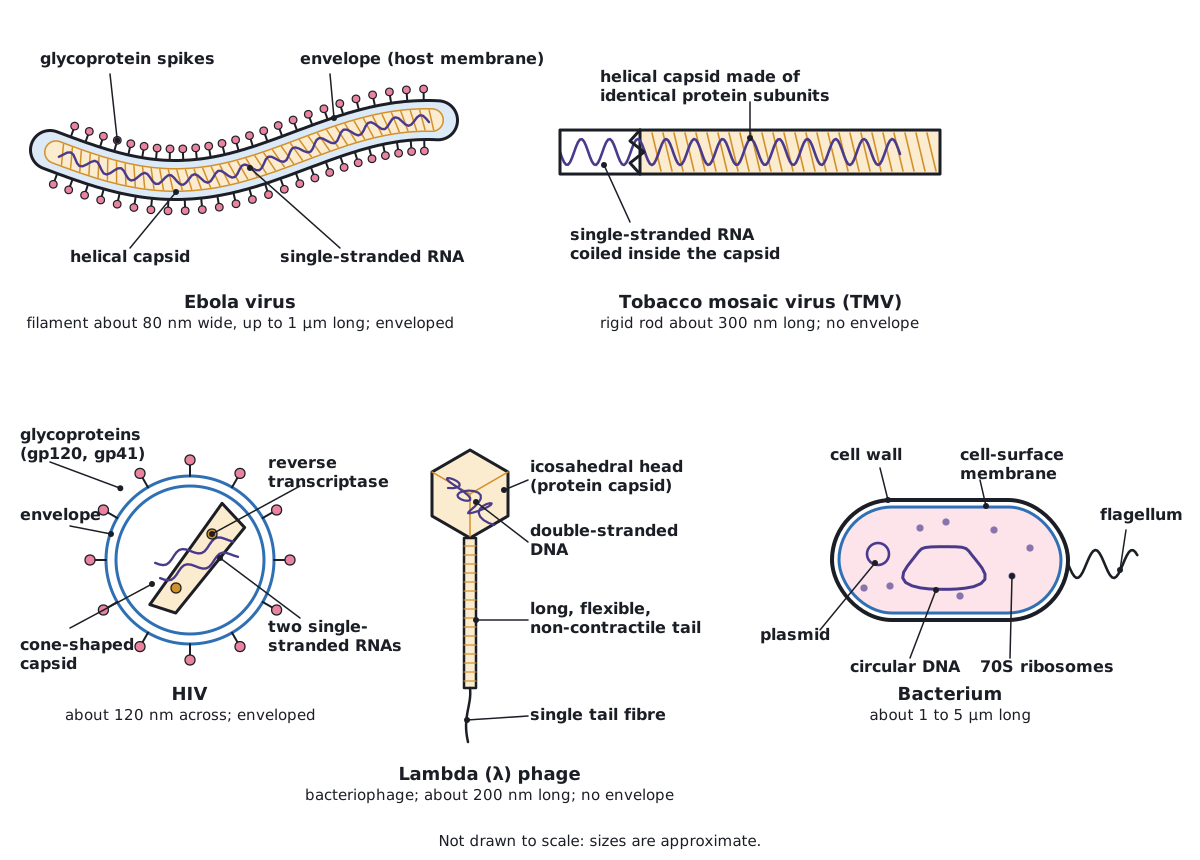 (opens full size in a new tab)
Viruses are not cells and are not made of 'a nucleus and cytoplasm'. Say 'nucleic acid in a capsid, with or without an envelope'. Never say viruses are killed by antibiotics.
Written and checked against the Edexcel International A Level Biology (YBI11) specification · Updated October 2026