
Triglycerides and ester bondsSpec 1.5(i)
In short
A triglyceride is formed when glycerol joins to three fatty acids. Each of the three condensation reactions links an –OH group of glycerol to the carboxyl group (–COOH) of a fatty acid, forming an ester bond and releasing a molecule of water. Hydrolysis of the ester bonds releases glycerol and fatty acids.
Lipids contain carbon, hydrogen and oxygen, but far less oxygen than carbohydrates. They are hydrophobic and do not dissolve in water. Triglycerides are the most common lipids in the diet and in fat stores.
- Glycerol is a small molecule with three carbon atoms, each carrying an –OH (hydroxyl) group.
- A fatty acid has a carboxyl group (–COOH) at one end and a long hydrocarbon chain (R) of typically 14 to 20 carbon atoms.
In each condensation reaction, the –OH of glycerol and the –OH of the carboxyl group of a fatty acid react. A molecule of water is removed and an ester bond (–COO–) forms between them. This happens three times, once at each –OH group of glycerol, so three water molecules are released. The three fatty acids in a triglyceride can be the same or different.
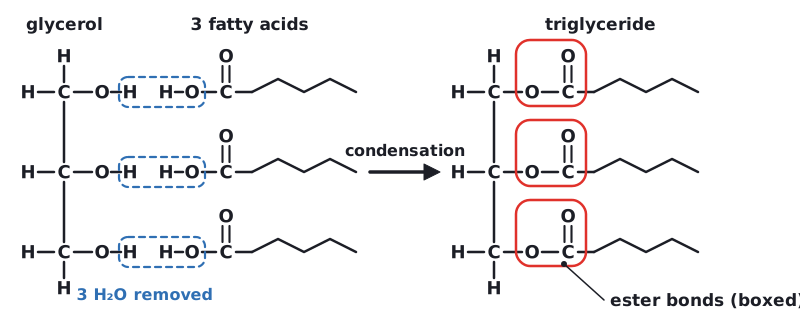 (opens full size in a new tab)
Hydrolysis of the ester bonds (catalysed by lipase) uses three water molecules and releases glycerol and three fatty acids.
The bond is an ester bond, not a glycosidic bond. Quote the numbers: three fatty acids, three ester bonds, three molecules of water.
Written and checked against the Edexcel International A Level Biology (YBI11) specification · Updated October 2026