
DNA replication and the role of DNA polymeraseSpec 2.10
In short
DNA replication is semi-conservative: each new DNA molecule contains one original strand and one newly made strand. The double helix unwinds and its hydrogen bonds break, each strand acts as a template, and DNA polymerase joins free nucleotides to the template by complementary base pairing, forming phosphodiester bonds.
Before a cell divides, its DNA must be copied. In semi-conservative replication, each of the two new DNA molecules is made of one original (old) strand and one newly synthesised strand.
- The enzyme DNA helicase unwinds the double helix and breaks the hydrogen bonds between the complementary bases, exposing the bases of the two template strands.
- Free DNA nucleotides in the nucleus pair up with their complementary bases on each template strand: A with T, C with G.
- DNA polymerase joins the nucleotides next to each other, forming phosphodiester bonds between them, which makes a new sugar–phosphate backbone. It adds nucleotides to the growing strand in one direction only.
- Hydrogen bonds form between the bases of the template and new strands, and each pair twists into a double helix.
- Two identical DNA molecules result, each with one old strand and one new strand.
The base sequence of the new strand is determined by the template strand, so the two new molecules have identical base sequences to the parent molecule (unless a mistake occurs, see gene mutations). This ensures that daughter cells receive the same genetic information.
A full-mark replication answer names DNA helicase (unwinding, breaking hydrogen bonds), complementary base pairing, DNA polymerase (joining nucleotides, forming phosphodiester bonds) and says 'semi-conservative'.
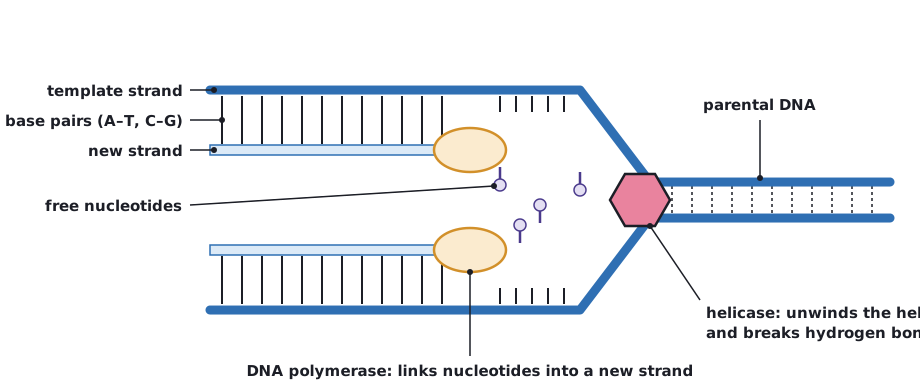 (opens full size in a new tab)
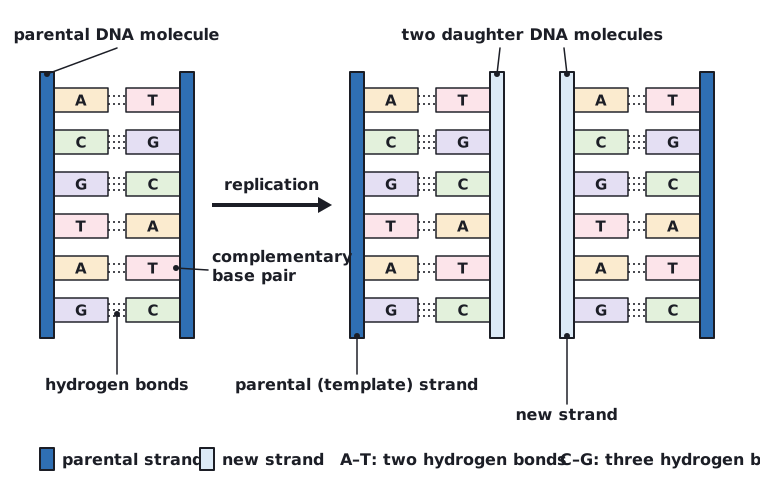 (opens full size in a new tab)
Written and checked against the Edexcel International A Level Biology (YBI11) specification · Updated October 2026