
Regions of the human brainSpec 8.14
In short
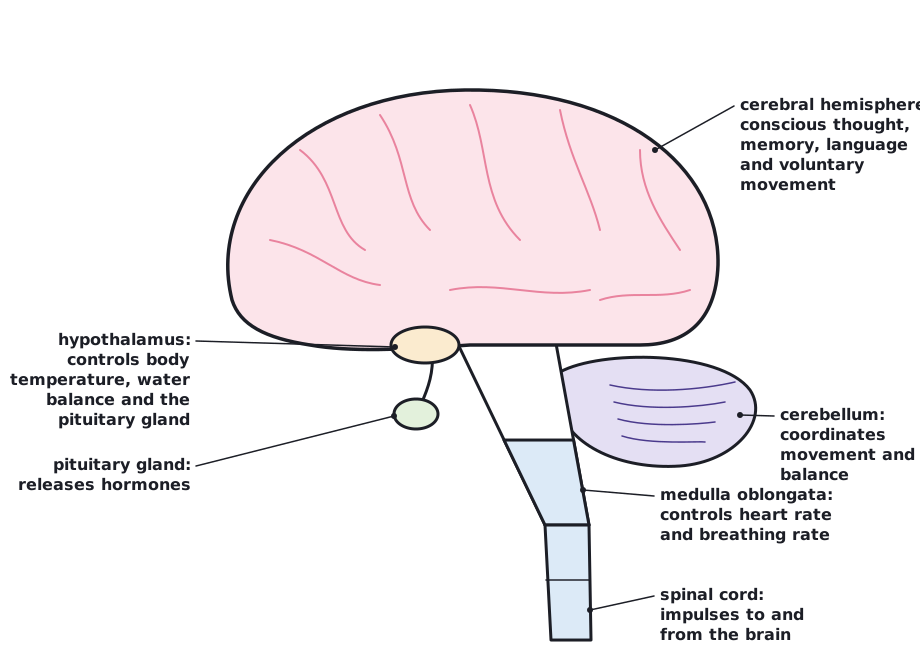
The human brain has distinct regions. The cerebral hemispheres control conscious thought, voluntary movement and senses; the hypothalamus maintains the internal environment and controls the pituitary gland; the pituitary releases hormones; the cerebellum coordinates movement and balance; and the medulla oblongata controls heart rate and breathing.
| Region | Location | Main functions |
|---|---|---|
| Cerebral hemispheres | Two large halves forming the upper and outer part of the brain, with a highly folded outer cortex | Sensory areas receive information from receptors; motor areas control voluntary movement; association areas are involved in conscious thought, learning, memory, language and decision-making |
| Hypothalamus | In the centre of the brain, below the thalamus | Monitors and regulates body temperature, water balance, hunger and thirst; makes hormones released by the posterior pituitary and controls the anterior pituitary; links the nervous and endocrine systems |
| Pituitary gland | Hangs from the base of the hypothalamus | Anterior lobe secretes hormones such as growth hormone and hormones controlling other glands; the posterior lobe releases ADH and oxytocin made in the hypothalamus |
| Cerebellum | At the back of the brain, below the cerebral hemispheres | Coordinates movement, balance and posture using information from the muscles, joints and ears; important for fine, skilled movement |
| Medulla oblongata | At the base of the brain, joining the spinal cord | Controls involuntary actions: heart rate, breathing (ventilation) rate and blood pressure; also swallowing and coughing reflexes |
 (opens full size in a new tab)
Common mistake:
Do not say that the cerebellum ‘starts’ movement. The motor areas of the cerebral hemispheres start voluntary movements; the cerebellum coordinates them to make them smooth and balanced.
Written and checked against the Edexcel International A Level Biology (YBI11) specification · Updated October 2026