
Classification and the three-domain systemSpec 4.14
In short
Classification organises the variety of life into groups based on relationships, using similarities and differences in phenotype and genotype, and is built around the species concept. When new molecular evidence is published, the scientific community evaluates it critically. This led to the three-domain system: Archaea, Bacteria and Eukarya.
Classification is a way of organising the variety of life into groups, based on the relationships between organisms. Organisms that are more closely related share more similarities in their phenotypes (observable features such as anatomy, physiology and behaviour) and in their genotypes (DNA base sequences, which can also be compared indirectly through the amino acid sequences of the proteins they code for).
The species concept and hierarchy
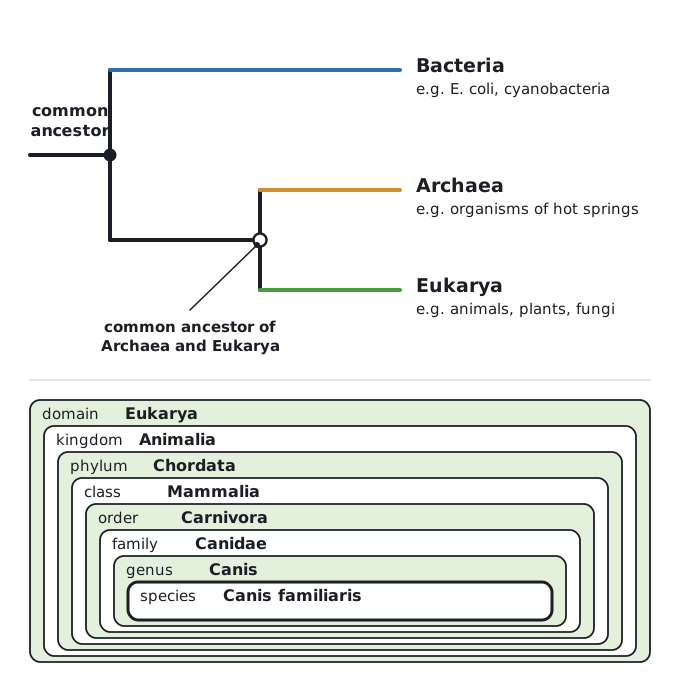
The basic unit of classification is the species: a group of organisms with similar characteristics that can interbreed to produce fertile offspring. Species are placed in a hierarchy of groups, each contained in the next: domain, kingdom, phylum, class, order, family, genus, species. Each species has a two-part name, the binomial (for example Homo sapiens), written with the genus first (capital letter) and the species second.
The species concept has limits: it does not apply to organisms that reproduce only asexually (including bacteria), or to fossils, and some different species can interbreed to produce hybrids.
Molecular evidence
Early classification used mainly physical features, which can mislead because unrelated organisms may look similar. Comparing DNA base sequences, the amino acid sequences of proteins and RNA sequences gives more objective evidence of how closely organisms are related. The more similar the sequences, the more recently the species shared a common ancestor.
Critical evaluation and the three domains
New data are critically evaluated by the scientific community. Before publication in a scientific journal, other experts check the methods, data and conclusions (peer review). After publication and presentation at conferences, other scientists discuss the findings and try to repeat the work, often with new data. Only if the evidence is supported do the taxonomic groupings change, which keeps classification reliable. Molecular evidence showed that the prokaryotes used to be considered a single kingdom contain two very different groups, and led to the three-domain system in which all organisms are placed into Archaea, Bacteria or Eukarya.
| Feature | Bacteria | Archaea | Eukarya |
|---|---|---|---|
| Nucleus | Absent | Absent | Present |
| Cell wall | Peptidoglycan | No peptidoglycan | Cellulose (plants), chitin (fungi), none in animals |
| Membrane lipids | Ester-linked | Ether-linked | Ester-linked |
| Ribosomes | 70S | 70S | 80S |
| DNA | Circular, no histones | Circular; in many species associated with histones | Linear, associated with histones |
| Examples | Escherichia coli | Methane-producing and many extreme-environment species | Plants, animals, fungi, protoctists |
 (opens full size in a new tab)
Written and checked against the Edexcel International A Level Biology (YBI11) specification · Updated October 2026