
Antigens, antibodies and antigen-presenting cellsSpec 6.9
In short
An antigen is a molecule, usually a protein or glycoprotein, that the immune system recognises as foreign and that triggers an immune response. Antibodies are Y-shaped proteins made by plasma cells that bind a specific antigen. Macrophages present antigens to T cells to start the response.
- Antigen
- A molecule (usually a protein or glycoprotein) on the surface of a pathogen, a foreign cell or a toxin, that is recognised as foreign by the immune system and stimulates an immune response.
- Antibody
- A protein (immunoglobulin) made by a plasma cell that binds specifically to one antigen.
Antibody structure
An antibody is a Y-shaped protein with four polypeptide chains: two identical heavy chains and two identical light chains, held together by disulfide bridges. Each arm has a variable region whose shape is complementary to one antigen and forms the antigen-binding site. The rest is the constant region, which is the same for all antibodies of one class, and a flexible hinge region lets the arms move. The tertiary structure of the variable region is different for each antibody, which is why each antibody binds only one antigen.
How antibodies help to destroy pathogens
- Agglutination: each antibody has two binding sites, so antibodies link pathogens together into clumps, which are easier for phagocytes to engulf.
- Opsonisation (marking): antibodies bound to the surface of a pathogen make phagocytosis easier, because phagocytes have receptors for the constant region.
- Neutralising toxins and blocking attachment: antibodies bind to toxins or to the proteins pathogens use to attach to or enter host cells.
The cells involved
| Cell | Role |
|---|---|
| Macrophage | Engulfs pathogen, digests it, and displays pieces of its antigens on its surface so that T cells can recognise them; also a phagocyte in the non-specific response |
| Antigen-presenting cell (APC) | Any cell that displays foreign antigen on its surface to T cells (macrophages, dendritic cells, and body cells infected by a virus). Presents the antigen to T cells with a complementary receptor |
| Plasma cell | A differentiated B cell (B effector cell) packed with rough endoplasmic reticulum, which secretes large numbers of one type of antibody |
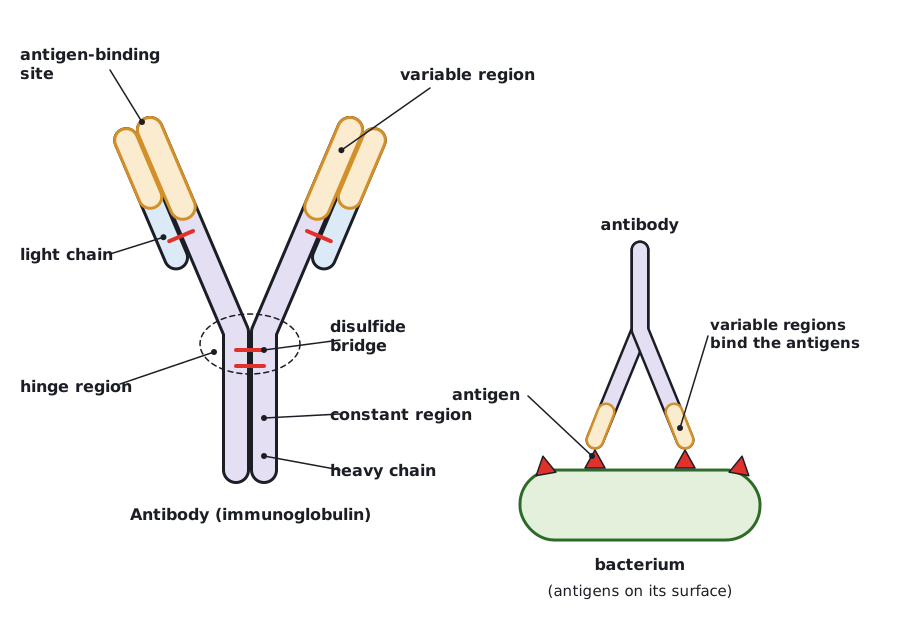 (opens full size in a new tab)
Antibodies are made by plasma cells, not by 'B memory cells' or by macrophages, and they are proteins, not cells.
Written and checked against the Edexcel International A Level Biology (YBI11) specification · Updated October 2026