
Auxin (IAA)Spec 8.11
In short
Auxin (IAA) is a plant growth substance made in shoot tips that moves down the shoot. It promotes cell elongation by increasing acidification of the cell wall and by changing transcription. Unequal distribution of auxin causes bending: shoots grow towards light and roots grow downwards.
Auxin (IAA, indoleacetic acid) is made in the tip of the shoot and moves to the regions where cells are elongating. It acts on target cells by binding to receptors, which is how it affects transcription of genes.
Effect on cell elongation
- Auxin binds to a receptor in a target cell. This leads to the breakdown of proteins that normally repress genes, so transcription factors are free to switch on genes for elongation.
- Auxin stimulates the activity of proton pumps (ATPase), which move H⁺ from the cytoplasm into the cell wall. The pH of the wall falls (becomes more acidic).
- The acid conditions activate wall proteins called expansins, which loosen the hydrogen bonds linking cellulose microfibrils to other wall polysaccharides, making the wall more extensible.
- Water enters the cell by osmosis and turgor pressure pushes the loosened wall outwards, so the cell elongates.
Phototropism and gravitropism
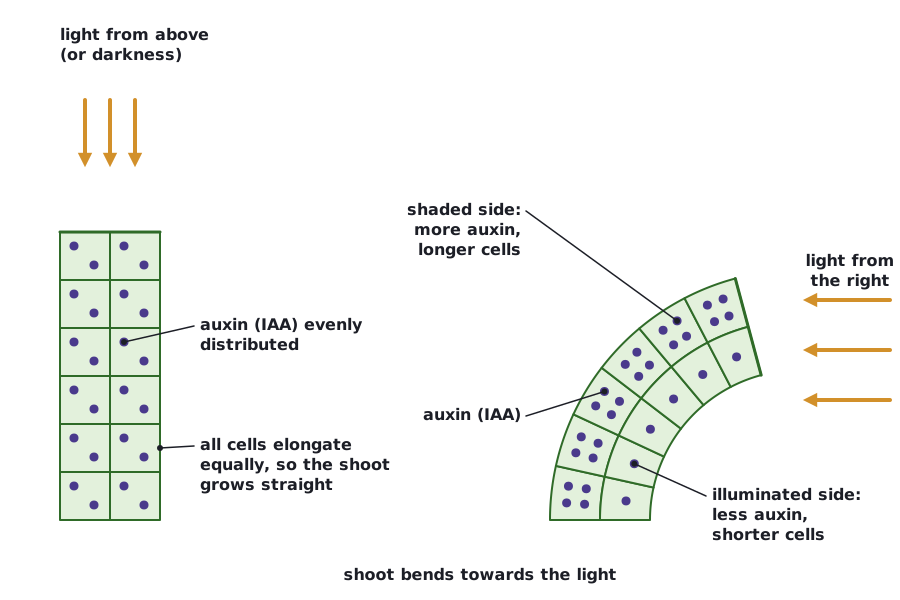
In phototropism, light causes auxin to be moved sideways to the shaded side of the shoot by carrier proteins. More auxin on the shaded side means those cells elongate more, so the shoot bends towards the light. In shoots gravitropism is negative: auxin accumulates on the lower side so the shoot bends upwards. In roots, the higher concentration of auxin on the lower side inhibits elongation, so the upper side grows faster and the root bends downwards (positive gravitropism).
 (opens full size in a new tab)
Light does not destroy auxin on the lit side. The auxin is redistributed to the shaded side, and cells there elongate faster.
Written and checked against the Edexcel International A Level Biology (YBI11) specification · Updated October 2026