
The light-independent reactions (Calvin cycle)Spec 5.4
In short
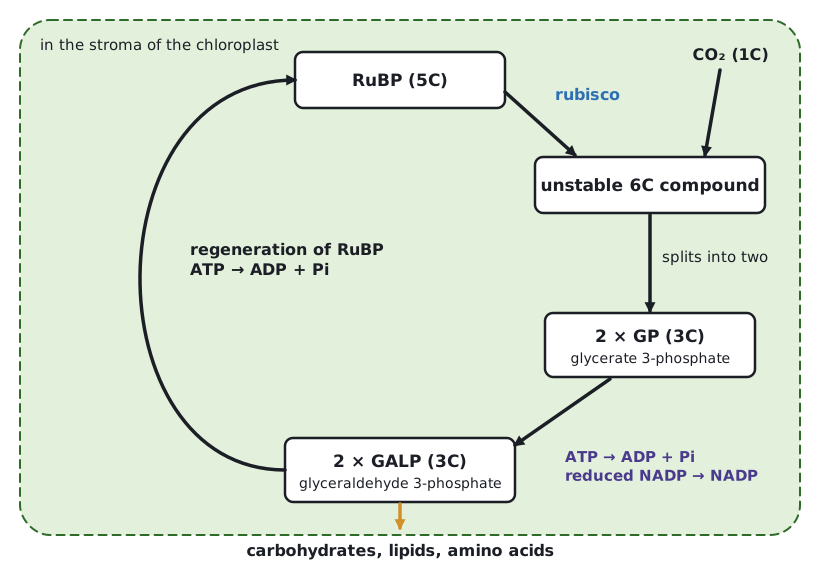
The light-independent reactions take place in the stroma. Carbon dioxide combines with ribulose bisphosphate (RuBP), catalysed by rubisco, to form glycerate 3-phosphate (GP). GP is reduced to glyceraldehyde 3-phosphate (GALP) using ATP and reduced NADP. Most GALP is used to regenerate RuBP, and the rest makes sugars and other molecules.
The light-independent reactions are a cycle of enzyme-controlled reactions called the Calvin cycle. They take place in the stroma of the chloroplast. They do not need light directly, but they depend on the ATP and reduced NADP made in the light-dependent reactions, so they stop soon after the light is switched off.
- Carbon fixation: carbon dioxide diffuses into the stroma and combines with the five-carbon compound ribulose bisphosphate (RuBP). The reaction is catalysed by the enzyme ribulose bisphosphate carboxylase-oxygenase (rubisco). The unstable six-carbon compound formed splits immediately into two molecules of the three-carbon compound glycerate 3-phosphate (GP).
- Reduction: GP is reduced to glyceraldehyde 3-phosphate (GALP, a triose phosphate) using hydrogen from reduced NADP and energy from ATP. Reduced NADP is oxidised back to NADP, and ATP to ADP and Pi, which return to the light-dependent reactions.
- Regeneration: most of the GALP (five of every six molecules) is used, with energy from ATP, to regenerate RuBP so that the cycle can continue.
- Synthesis: the remaining GALP is used to make glucose and other organic molecules. Two GALP molecules are needed to make one hexose sugar, so the cycle must turn six times to fix the six carbon atoms needed for one glucose molecule.
 (opens full size in a new tab)
Uses of the products (5.4(ii))
The products of photosynthesis are simple sugars. These are used by plants, animals and other organisms in respiration, to release energy, and in the synthesis of new biological molecules.
| Molecule made | How the products of the Calvin cycle are used |
|---|---|
| Polysaccharides | Glucose is made from GALP, then joined by condensation to make starch (storage) and cellulose (cell walls) |
| Lipids | Glycerol is made from GALP, and fatty acids from GP (via acetyl CoA), then combined to form triglycerides |
| Amino acids and proteins | GP provides the carbon skeletons. Nitrogen comes from nitrate ions absorbed from the soil. Amino acids are joined by condensation to form proteins |
| Nucleic acids | Sugars provide the pentose sugars (ribose, deoxyribose) and carbon for bases. Phosphate groups come from phosphate ions in the soil |
Animals and other organisms (such as fungi and many microorganisms) obtain these sugars and the molecules made from them by feeding, and use them in the same ways.
If asked what happens to GP and RuBP levels when conditions change, work through the cycle. In darkness, ATP and reduced NADP run out, so GP cannot be reduced: GP rises and RuBP falls. With less carbon dioxide, RuBP cannot be used: RuBP rises and GP falls.
Written and checked against the Edexcel International A Level Biology (YBI11) specification · Updated October 2026