
Effects of climate change on plants and animalsSpec 5.20
In short
Climate change alters temperature, rainfall patterns and the timing of the seasons. These changes affect where species can live, so distributions shift towards the poles or to higher altitude, and they alter development and life cycles, for example the timing of flowering, hatching and migration. Species with different responses can become out of step.
Distribution of species
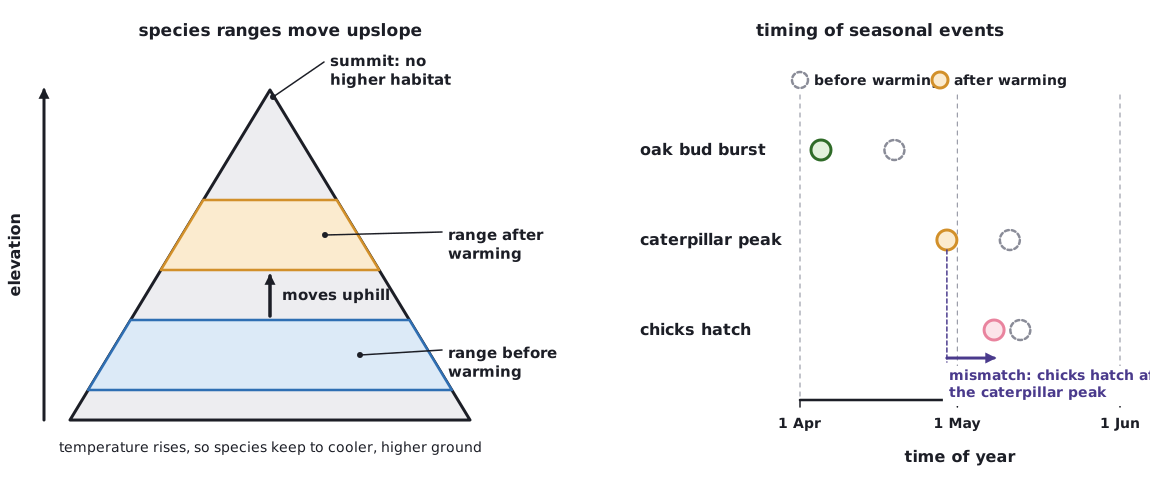
Each species survives within a range of abiotic conditions. As temperatures and rainfall change, the area that meets these conditions moves. Species move towards the poles or to higher altitude if they can, or their range contracts if they cannot. Examples include warm-adapted species such as some insects and plants spreading into new areas, and cold-adapted species in the Arctic and on mountain tops losing habitat. Changes in rainfall alter water availability, so drought-tolerant species can replace others, and species may become isolated when habitats change.
Development and life cycles
- Higher temperatures speed up enzyme-controlled reactions in ectotherms, so some insects complete their life cycle faster and may produce more generations per year.
- Seasonal events occur earlier: leaves open, plants flower, insects emerge and eggs hatch earlier in spring, and some animals migrate at different times or stop migrating.
- Species that depend on one another may respond differently, so timing may no longer match. For example, if caterpillars emerge earlier but the birds that feed their chicks on them lay at the same time as before, there is less food when chicks hatch and fewer survive.
- Changes in rainfall affect the timing of germination and breeding in species that depend on wet or dry seasons.
- Changes in the length and warmth of the growing season affect plant growth, seed production and crop yields.
 (opens full size in a new tab)
Always say what has changed (for example temperature or rainfall) and then how it affects the organism (for example faster development or a shifted range). Use named examples if you can, but the explanation matters more than the example.
Written and checked against the Edexcel International A Level Biology (YBI11) specification · Updated October 2026