
Haemoglobin and the transport of oxygen and carbon dioxideSpec 1.9(i)
In short
Haemoglobin is a protein in red blood cells with four haem groups, each able to bind one oxygen molecule, forming oxyhaemoglobin. Most carbon dioxide is carried as hydrogencarbonate ions in the plasma, formed in red blood cells by carbonic anhydrase. Some binds to haemoglobin and some dissolves in plasma.
Transport of oxygen
Haemoglobin (Hb) is a protein with a quaternary structure: four polypeptide chains, each with a haem group containing an Fe²⁺ ion. Each haem group can combine reversibly with one oxygen molecule, so one haemoglobin molecule can carry four O₂ molecules. Haemoglobin is packed inside red blood cells.
In the lungs the partial pressure of oxygen is high, so oxygen loads onto haemoglobin, forming oxyhaemoglobin. In respiring tissues the partial pressure of oxygen is low, so oxygen is released (unloaded) and diffuses into cells.
Transport of carbon dioxide
| Form | Approximate share | Where and how |
|---|---|---|
| Hydrogencarbonate ions (HCO₃⁻) | Most (about 70 to 85 %) | Formed inside red blood cells and carried in plasma |
| Carbaminohaemoglobin | About 10 to 20 % | CO₂ binds directly to haemoglobin |
| Dissolved CO₂ | About 5 % | Dissolved in plasma |
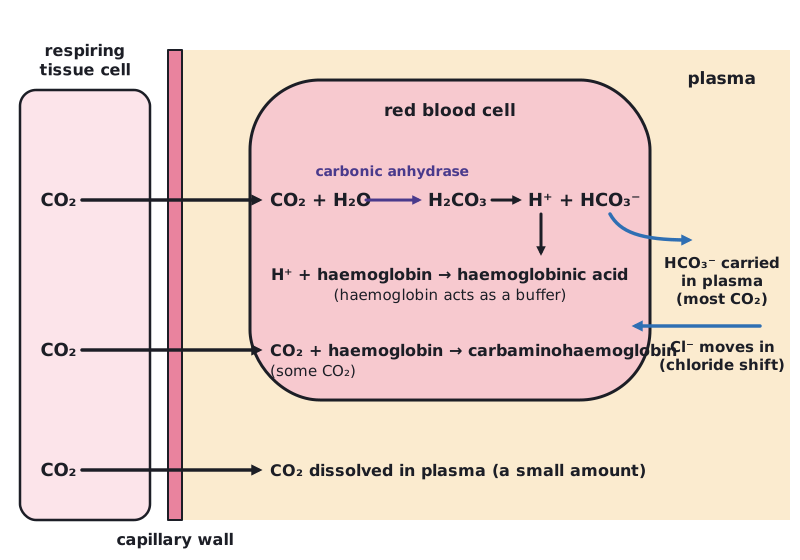
- CO₂ from respiring tissues diffuses into red blood cells.
- The enzyme carbonic anhydrase catalyses CO₂ + H₂O ⇌ H₂CO₃ (carbonic acid), which dissociates: H₂CO₃ ⇌ H⁺ + HCO₃⁻.
- HCO₃⁻ diffuses out of the red blood cell into the plasma. Chloride ions (Cl⁻) move in to balance the charge (the chloride shift).
- H⁺ ions bind to haemoglobin, forming haemoglobinic acid. Haemoglobin therefore acts as a buffer, preventing a large fall in pH in the red blood cell.
- In the lungs the reactions run in reverse and CO₂ diffuses out of the blood into the alveoli.
 (opens full size in a new tab)
Most carbon dioxide is carried as hydrogencarbonate ions in the plasma, not on haemoglobin. Haemoglobin’s role in carbon dioxide transport is to combine with H⁺ ions (buffering) and to carry some CO₂ directly.
Written and checked against the Edexcel International A Level Biology (YBI11) specification · Updated October 2026