
The carbon cycle and reducing atmospheric carbon dioxideSpec 5.18
In short
In the carbon cycle, carbon dioxide is removed from the atmosphere by photosynthesis and dissolving in oceans, and is returned by respiration, decomposition and combustion. Methods to reduce atmospheric carbon dioxide act on these processes: increasing carbon stored in plants and soils, protecting carbon sinks, and burning less fossil fuel.
The carbon cycle describes how carbon moves between the atmosphere, oceans, living organisms, soil and rocks. Carbon is held in sinks such as plants, soil, oceans and fossil fuels, and moves between them in the following processes.
| Process | Effect on atmospheric CO₂ |
|---|---|
| Photosynthesis (plants, algae, cyanobacteria) | Removes CO₂ and stores carbon in organic molecules |
| Respiration (all organisms) | Returns CO₂ to the atmosphere |
| Feeding | Transfers carbon compounds along food chains |
| Decomposition by bacteria and fungi | Returns CO₂ to the atmosphere (and methane in anaerobic conditions) |
| Fossilisation (when decomposition is incomplete) | Locks carbon in peat, coal, oil and gas for millions of years |
| Combustion (fossil fuels and biomass) | Rapidly returns stored carbon as CO₂ |
| Dissolving in oceans; formation of carbonates | Removes CO₂ from the atmosphere and stores it in the ocean |
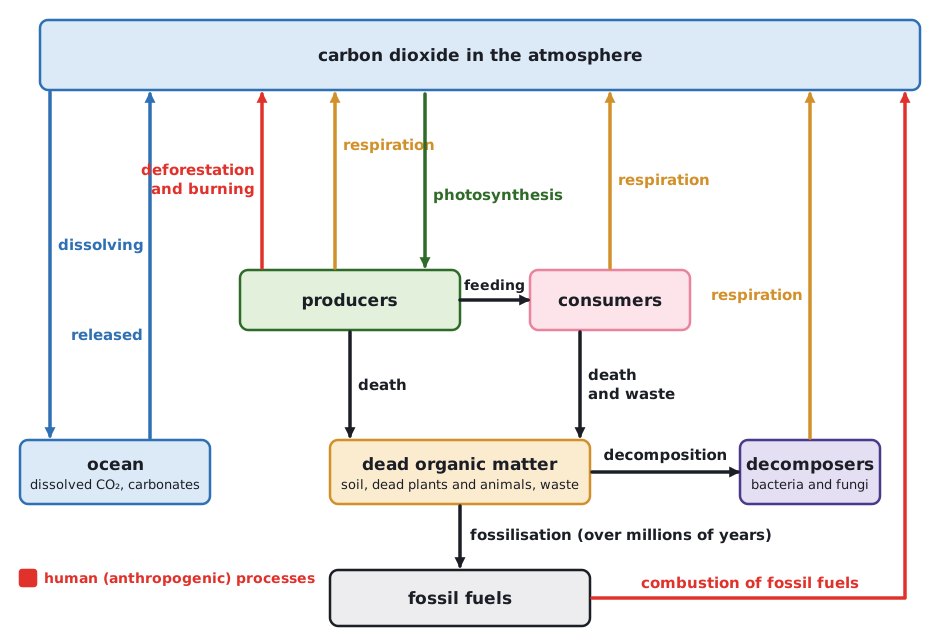 (opens full size in a new tab)
Applying knowledge of the cycle to reduce atmospheric CO₂
- Afforestation and reforestation: planting trees increases photosynthesis, so more CO₂ is removed from the atmosphere and held in wood. It works only while the trees grow, and carbon is released again if the wood is burnt or the forest destroyed.
- Protecting existing forests, peat bogs and wetlands: these are large carbon sinks. Draining peat or burning forests releases stored carbon. Preventing deforestation keeps this carbon locked up.
- Reducing the combustion of fossil fuels: using renewable energy (wind, solar, hydroelectric) and energy efficiency reduces the transfer of carbon from the fossil store to the atmosphere.
- Using biofuels in place of fossil fuels: the carbon dioxide released on burning was recently absorbed by the plants, so the process may be close to carbon neutral (see 5.26 for conflicts).
- Reducing decomposition and respiration of soils and returning organic matter to the soil, for example by minimal tillage, keeps carbon in the soil.
- Carbon capture and storage: carbon dioxide from power stations is collected and stored underground. It does not change the cycle itself but reduces the flow to the atmosphere.
Always link a method to a stage of the cycle: 'planting trees increases photosynthesis, which removes CO₂ from the atmosphere' scores; 'trees absorb CO₂' on its own may not.
Written and checked against the Edexcel International A Level Biology (YBI11) specification · Updated October 2026