
Microorganisms, decomposition and recycling carbonSpec 6.16
In short
Saprotrophic bacteria and fungi decompose dead organisms, faeces and waste by secreting extracellular enzymes that digest organic matter and absorbing the soluble products. Their respiration releases carbon dioxide to the atmosphere, recycling carbon so it is available to producers for photosynthesis.
Decomposers are mostly saprotrophic bacteria and fungi. They feed by extracellular digestion: they secrete enzymes (proteases, lipases, carbohydrases such as cellulase) on to dead plants and animals, faeces and other waste. The enzymes hydrolyse large molecules into soluble ones (amino acids, fatty acids, glucose), which the microorganism absorbs. They use some of these for growth and respiration.
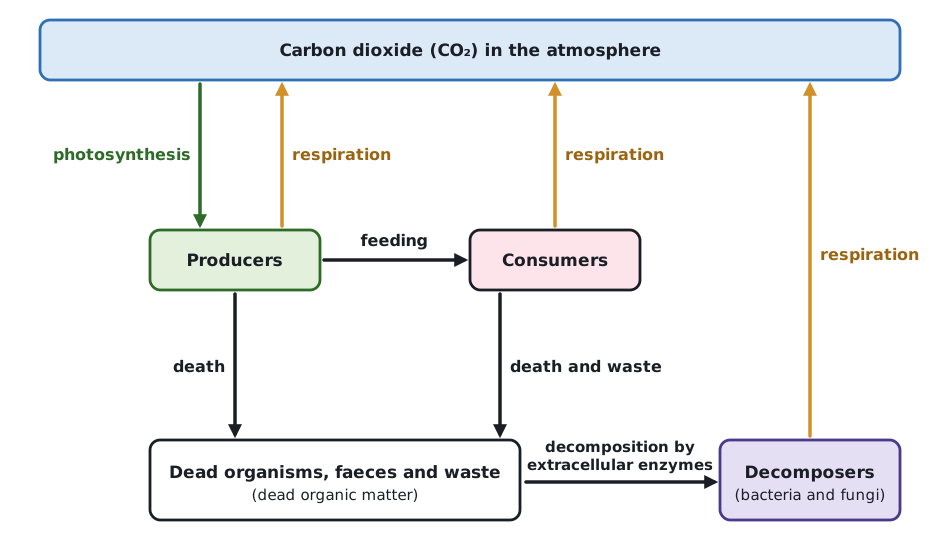
- Producers take carbon dioxide from the atmosphere and fix it into organic compounds by photosynthesis.
- Carbon passes to consumers when they feed.
- Producers, consumers and decomposers all release carbon dioxide into the atmosphere by respiration.
- Dead organisms, faeces and waste are digested by saprotrophs. Carbon in the organic molecules is converted to carbon dioxide when the decomposers respire, and the carbon is available again to producers.
Decomposition is fastest when conditions suit the microorganisms: warm temperatures (enzymes near their optimum), moisture, oxygen for aerobic respiration, and a suitable pH. Cold, dry, waterlogged, anaerobic or acidic conditions slow it, which is why peat and bog bodies persist. Without microorganisms, carbon would remain locked up in dead matter and producers would run short of carbon dioxide.
 (opens full size in a new tab)
Say that decomposers secrete extracellular enzymes, absorb the digested products and respire, releasing CO₂. 'They break down dead things' alone gains no marks.
Written and checked against the Edexcel International A Level Biology (YBI11) specification · Updated October 2026