
DNA profilingSpec 6.19
In short
DNA profiling compares variable-length repeated sequences in non-coding DNA (short tandem repeats). They are amplified by PCR and separated by gel electrophoresis, giving a band pattern. It identifies individuals and shows relationships between organisms, because offspring inherit half their bands from each parent.
Much of the genome is non-coding DNA, which contains short sequences repeated many times in a row (short tandem repeats, STRs). The number of repeats at each position (locus) differs between individuals, so the length of the fragment differs. Each person inherits one set from each parent, so, apart from identical twins, no two people have the same pattern across several loci.
- DNA is extracted from a sample (blood, hair root, saliva, tissue or seed).
- Regions containing STRs are amplified by PCR using primers (often labelled with a fluorescent tag).
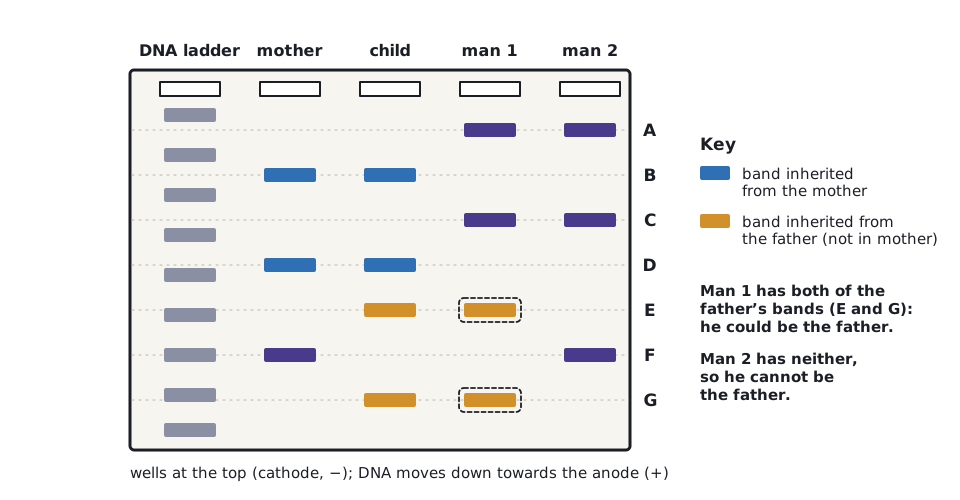
- The fragments are separated by gel electrophoresis and detected, giving a pattern of bands (the DNA profile).
- Profiles are compared. Bands at the same position in two samples match.
Uses
| Use | How profiles are used |
|---|---|
| Identification: forensic | DNA from a crime scene is compared with DNA from suspects or a database; a match of many bands makes it very unlikely that the DNA is from anyone else |
| Identification: victims, species and products | Identifies remains; identifies species or individual animals, for example illegal ivory or poached animals; identifies plant varieties or checks the origin of food or timber |
| Genetic relationships: individuals | Paternity and maternity: every band in a child's profile must be present in the mother or the father. The father's bands that the child has but the mother does not show who the father could be |
| Genetic relationships: plants and animals | Measures the relatedness of individuals in a breeding programme or wild population, so that inbreeding can be reduced; used to show relationships between species and varieties |
Probability: if the chance of a match at one locus is 1 in 10 and loci are independent, the chance of a match at five loci is (1/10)⁵ = 1 in 100 000. More loci mean a more reliable identification.
 (opens full size in a new tab)
Written and checked against the Edexcel International A Level Biology (YBI11) specification · Updated October 2026