
Cystic fibrosisSpec 2.16
In short
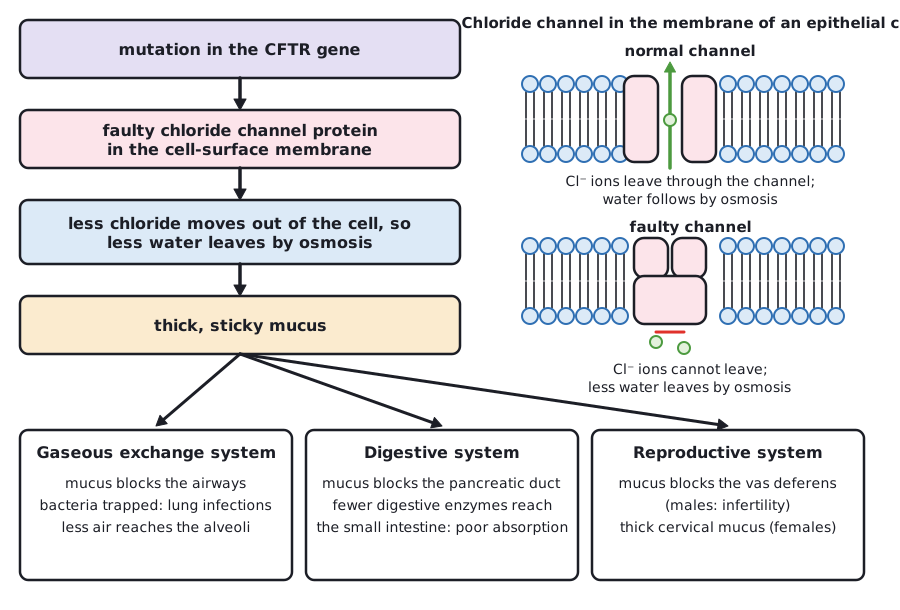
Cystic fibrosis is caused by a recessive mutation in the gene for the CFTR protein, a chloride ion channel in cell-surface membranes. The faulty protein reduces the movement of chloride ions and water out of cells, so mucus is thick and sticky. This blocks and damages the gaseous exchange, digestive and reproductive systems.
Cystic fibrosis is a genetic disorder caused by a recessive allele of the CFTR gene, on chromosome 7. Someone with the condition has two copies of the faulty allele; carriers (heterozygous) have one copy and do not have symptoms. The commonest mutation is a deletion of three bases, which removes one amino acid from the protein.
From mutation to symptoms
- The gene mutation changes the primary structure of the CFTR protein, so it folds into the wrong tertiary structure.
- The faulty protein does not work as a chloride ion channel in the cell-surface membrane (or does not reach the membrane).
- Chloride ions are not secreted out of the epithelial cells, so water does not move out by osmosis (the water potential gradient is reduced).
- The mucus on the surface of the epithelium is therefore thick and sticky, instead of thin and watery.
| System | Effect |
|---|---|
| Gaseous exchange | Thick mucus blocks the airways and traps bacteria, which cannot be removed by cilia. This causes repeated lung infections, inflammation and damage, reducing the surface area for gas exchange and making breathing difficult. Less oxygen reaches the blood. |
| Digestive | Thick mucus blocks the pancreatic duct, so digestive enzymes (amylase, lipase and protease) cannot reach the small intestine. Food is poorly digested and absorbed, which causes poor growth and malnutrition. Mucus may also block the intestine. |
| Reproductive | In males, the tubes (vas deferens) that carry sperm may be blocked or missing, causing infertility. In females, thick mucus in the cervix can prevent sperm from reaching the egg, reducing fertility. |
To score full marks on 'how does a mutation cause these symptoms', follow the chain: gene mutation → faulty channel protein → less chloride and water secretion → thick mucus → blockage of the specific system.
 (opens full size in a new tab)
Written and checked against the Edexcel International A Level Biology (YBI11) specification · Updated October 2026