
Chloroplast structure and functionSpec 5.5
In short
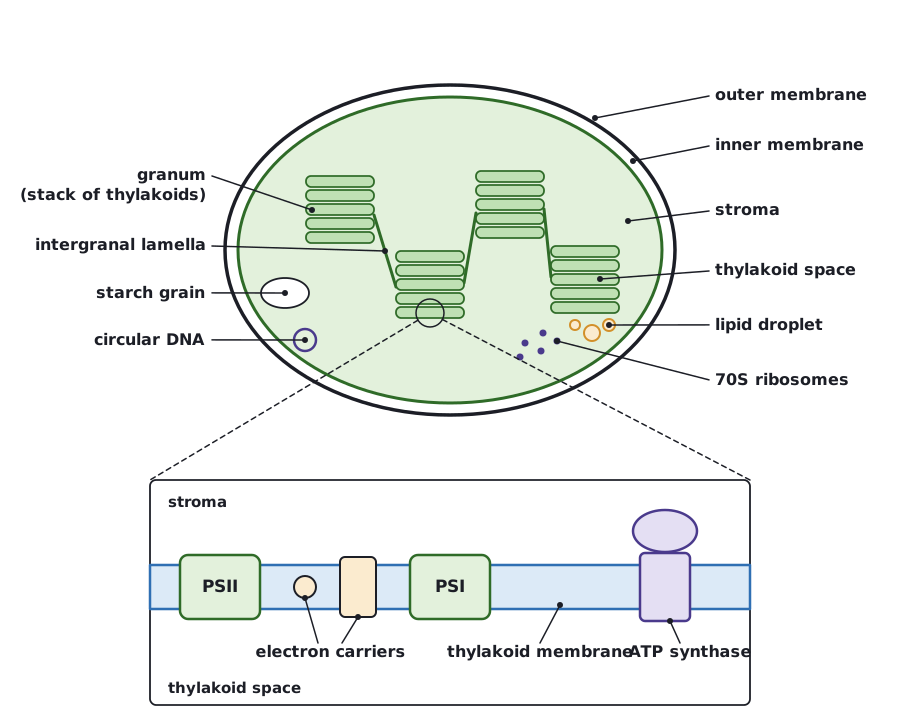
A chloroplast is surrounded by a double membrane (envelope) and contains stroma, thylakoids and grana. The thylakoid membranes hold pigments, electron carriers and ATP synthase for the light-dependent reactions, and the stroma holds the enzymes for the Calvin cycle. This arrangement lets the two stages occur close together.
Chloroplasts are found mainly in palisade mesophyll cells. They are biconvex discs about 2 to 10 µm long. Each is surrounded by a chloroplast envelope of two phospholipid membranes, which controls the entry and exit of substances such as carbon dioxide, ATP and sugars.
| Structure | Description | Role in photosynthesis |
|---|---|---|
| Thylakoid membranes | Flattened fluid-filled sacs, with a thylakoid space inside | Contain chlorophyll and other pigments in photosystems, electron carriers and ATP synthase. Site of the light-dependent reactions. The small space inside allows a proton gradient to build up quickly |
| Grana (singular granum) | Stacks of thylakoids | Give a very large surface area for pigments, so more light is absorbed. Stacks are arranged to capture light efficiently |
| Intergranal lamellae | Thylakoid membranes joining one granum to the next | Link grana, and keep them in position |
| Stroma | Colourless fluid-filled matrix surrounding the grana | Contains the enzymes (including rubisco) for the light-independent reactions, starch grains, lipid droplets, and the chloroplast’s own DNA and ribosomes |
| Starch grains | Insoluble stores in the stroma | Temporary store of the sugars made in the Calvin cycle |
| Chloroplast DNA and ribosomes | A small circular DNA molecule and 70S ribosomes | Allow chloroplasts to make some of their own proteins, for example some rubisco subunits |
 (opens full size in a new tab)
The two stages of photosynthesis are in different places but close together. The ATP and reduced NADP made on the thylakoid membranes are used straight away in the stroma next door, so little energy is lost in transport.
Written and checked against the Edexcel International A Level Biology (YBI11) specification · Updated October 2026