
ADH and the control of plasma concentrationSpec 7.21
In short
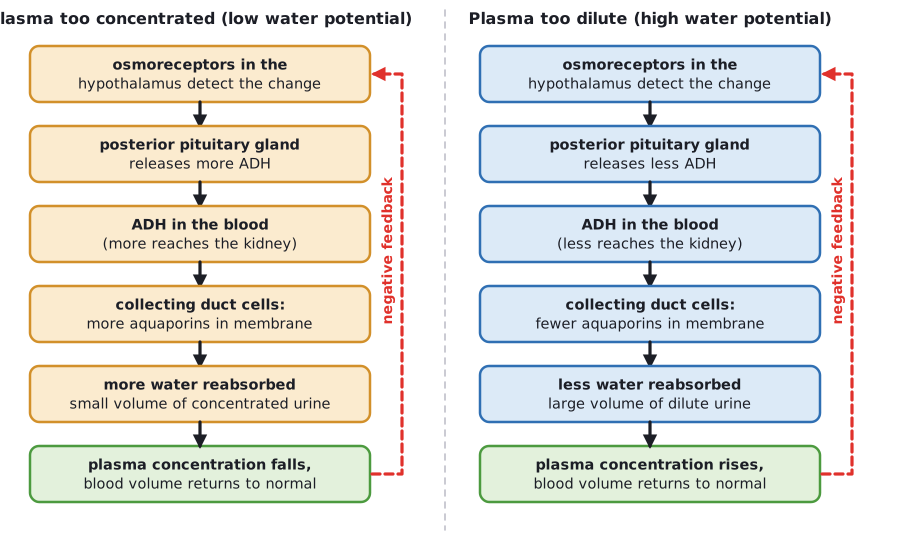
Osmoreceptors in the hypothalamus detect changes in the concentration of blood plasma. A rise stimulates the posterior pituitary gland to release more antidiuretic hormone (ADH), which makes the collecting ducts more permeable to water, so more is reabsorbed. This returns the plasma concentration and blood volume to normal by negative feedback.
The concentration of the blood plasma (its water potential) and the blood volume must be kept within narrow limits. This is osmoregulation, and it is controlled by negative feedback involving the hypothalamus, the pituitary gland and the hormone ADH (antidiuretic hormone).
If the blood plasma becomes too concentrated (for example after sweating, or little water)
- Osmoreceptors in the hypothalamus detect the low water potential of the blood: they lose water by osmosis and shrink.
- The hypothalamus stimulates neurosecretory cells that make ADH. ADH passes down their axons to the posterior pituitary gland and is released into the blood.
- ADH travels in the blood to the kidney and binds to receptors on the cell surface membranes of the collecting duct (and distal convoluted tubule) cells.
- This activates a second messenger system that causes vesicles containing aquaporins (water channels) to fuse with the cell surface membrane. The walls therefore become more permeable to water.
- More water leaves the collecting duct by osmosis into the concentrated medulla and returns to the blood. A small volume of concentrated urine is produced.
- Plasma water potential and blood volume rise back to normal, so osmoreceptors are no longer stimulated and less ADH is released: negative feedback.
If the blood plasma is too dilute
The osmoreceptors are not stimulated, so less ADH is released. Fewer aquaporins are in the membrane of the collecting duct, so it is less permeable to water. Less water is reabsorbed and a large volume of dilute urine is produced. This lowers the blood volume and raises the concentration of the plasma.
Describe the whole loop: stimulus, receptor, hormone, target cells, response, then the effect that reverses the change. Mention the pituitary gland and aquaporins.
 (opens full size in a new tab)
Quick check
What is negative feedback?
Show answer
A change is detected and the response reverses it, returning the factor towards its set point.
Which part of the brain contains the thermoreceptors that detect core temperature?
Show answer
The hypothalamus.
What forces fluid out of the glomerulus?
Show answer
High hydrostatic pressure, caused by the afferent arteriole being wider than the efferent arteriole.
Which limb of the loop of Henle is impermeable to water?
Show answer
The ascending limb.
What is the effect of ADH on the collecting duct?
Show answer
It makes the walls more permeable to water by inserting aquaporins, so more water is reabsorbed.
Written and checked against the Edexcel International A Level Biology (YBI11) specification · Updated October 2026