
Physical digestion and teethSpec 7.3.1, 7.3.2, 7.3.3, 7.3.4, 7.3.5
In short
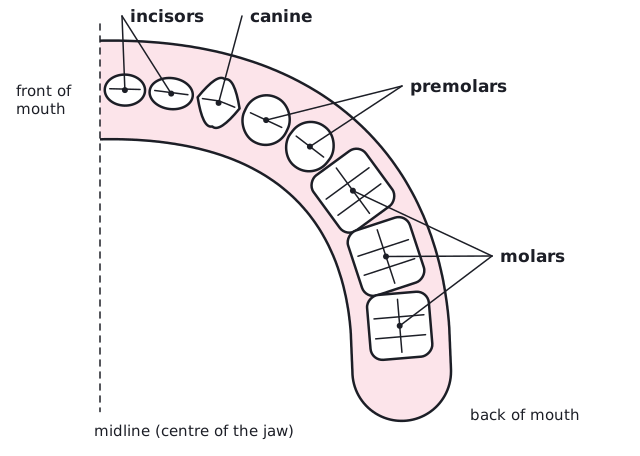
Physical digestion is the breakdown of food into smaller pieces without chemical change to the food molecules. It increases the surface area of the food for enzymes to act on. Incisors bite and cut food, canines tear and grip it, and premolars and molars crush and grind it. Teeth are embedded in the jawbone and gums.
Physical digestion is the breakdown of food into smaller pieces without chemical change to the food molecules.
Physical digestion increases the surface area of the food, so enzymes in chemical digestion can act on more of it at once.
Types of human teeth
| Type | Shape | Function in physical digestion |
|---|---|---|
| Incisors | Flat, chisel-shaped edge | Biting and cutting food |
| Canines | Pointed | Tearing and gripping food |
| Premolars | Broad with a ridged surface | Crushing and grinding food |
| Molars | Large and broad with a ridged surface | Crushing and grinding food |
 (opens full size in a new tab)
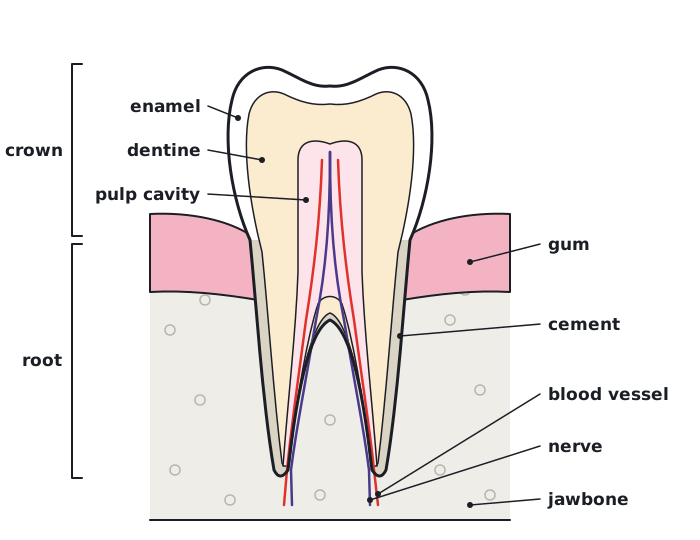
Structure of a tooth
| Part | Description and function |
|---|---|
| Enamel | The hard outer covering of the crown; protects the tooth |
| Dentine | Hard, bone-like material under the enamel |
| Pulp | The soft centre of the tooth, containing nerves and blood vessels |
| Nerves and blood vessels | Nerves sense pain, temperature and pressure; blood vessels supply the living cells of the tooth |
| Cement | Covers the root and fixes the tooth in the jawbone |
Teeth are embedded in bone (the jawbone) and in the gums, which hold them firmly in place.
 (opens full size in a new tab)
Match each tooth to its job: incisors cut, canines tear, premolars and molars crush and grind. Use those exact verbs.
Written and checked against the Cambridge IGCSE Biology (0610) specification · Updated October 2026