
Classification, evolution and DNASpec 1.2.5, 1.2.6, 1.2.7
In short
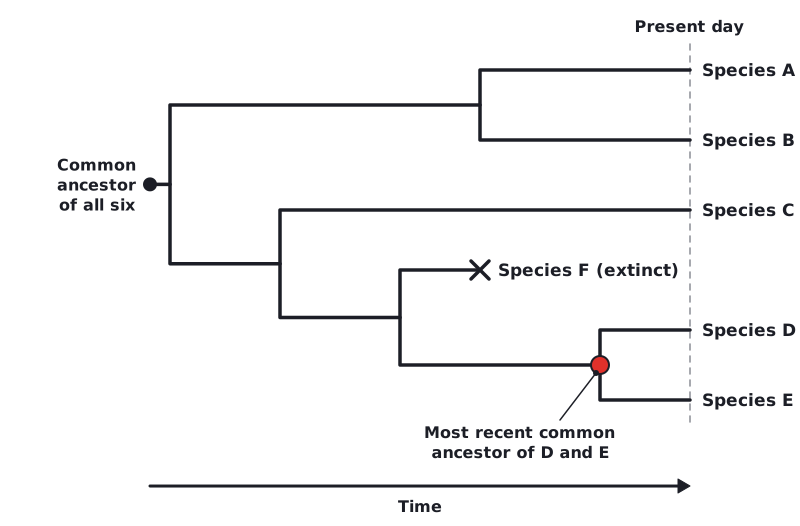
Classification systems aim to reflect evolutionary relationships, grouping organisms that are believed to have evolved from a common ancestor. The sequences of bases in DNA are used for classification: organisms that share a more recent ancestor have more similar base sequences. Organisms that separated long ago have gathered more differences, because mutations change the sequence over time.
Classification systems aim to reflect evolutionary relationships. Organisms are grouped together because they are believed to have evolved from a common ancestor, not just because they look alike.
DNA and classification
The sequences of bases in DNA are used as a means of classification. Scientists compare the base sequence of the same gene in different organisms. DNA is inherited from ancestors, so the more similar the sequences are, the more recently the organisms shared an ancestor.
Groups of organisms which share a more recent ancestor (are more closely related) have base sequences in DNA that are more similar than those that share only a distant ancestor. Over time, mutations change the sequence, so organisms that separated long ago have gathered more differences.
 (opens full size in a new tab)
| Species | Similarity to human gene / % |
|---|---|
| Chimpanzee | 99 |
| Mouse | 85 |
| Chicken | 75 |
The values are for practice. The chimpanzee sequence is the most similar, so the chimpanzee shares the most recent common ancestor with humans and is the most closely related.
Link the three ideas in your answer: similar DNA base sequences, a more recent common ancestor, and closer relationship.
Quick check
Define a species.
Show answer
A group of organisms that can reproduce to produce fertile offspring.
Which two parts make up a binomial name?
Show answer
The genus and the species.
What is excretion?
Show answer
The removal of the waste products of metabolism and substances in excess of requirements.
What does 'dichotomous' mean?
Show answer
Divides into two: each step of the key offers a choice between two statements.
Supplement How does DNA show that two species are closely related?
Show answer
Their DNA base sequences are more similar, because they share a more recent common ancestor.
Written and checked against the Cambridge IGCSE Biology (0610) specification · Updated October 2026