
MeiosisSpec 17.3.1, 17.3.2
In short
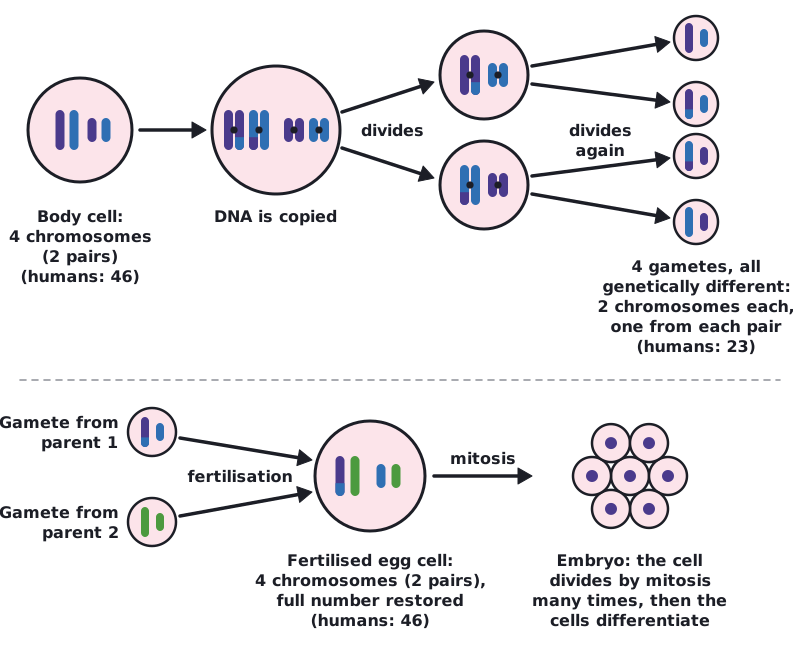
Meiosis is a reduction division that halves the chromosome number from diploid to haploid, producing gametes that are genetically different from each other and from the parent cell. It takes place in the testes and ovaries. In humans, gametes with 23 chromosomes are made from cells with 46, so fertilisation restores 46 in the zygote.
Meiosis is involved in the production of gametes. It takes place in the reproductive organs (the testes and ovaries in humans).
Meiosis is a reduction division. The chromosome number is halved from diploid to haploid. It results in cells that are genetically different from each other and from the parent cell.
 (opens full size in a new tab)
In humans, meiosis makes gametes with 23 chromosomes from a cell with 46 chromosomes. When a sperm fertilises an egg, the full number of 46 chromosomes is restored in the zygote. If gametes were diploid, the chromosome number would double in every generation.
| Mitosis | Meiosis | |
|---|---|---|
| Number of daughter cells | 2 | 4 |
| Chromosome number in daughter cells | same as parent (diploid) | half of parent (haploid) |
| Genetically | identical to the parent | different from each other and the parent |
| Used for | growth, repair, replacement, asexual reproduction | production of gametes |
You do not need the stages of meiosis. Learn the keywords: gametes, reduction division, diploid to haploid, genetically different.
Quick check
Supplement Define mitosis.
Show answer
Nuclear division giving rise to genetically identical cells.
Supplement State four roles of mitosis.
Show answer
Growth, repair of damaged tissues, replacement of cells, asexual reproduction.
Supplement What happens to the chromosomes before mitosis?
Show answer
They are copied exactly (replicated).
Supplement What is a stem cell?
Show answer
An unspecialised cell that divides by mitosis to produce daughter cells that can become specialised.
Supplement What happens to the chromosome number in meiosis?
Show answer
It is halved, from diploid to haploid.
Written and checked against the Cambridge IGCSE Biology (0610) specification · Updated October 2026