
The kidney and the nephronSpec 13.1.5
In short
A nephron is a tiny tube in the kidney that filters the blood and forms urine. At the glomerulus, high pressure forces water, glucose, urea and ions out of the blood, while proteins and blood cells stay behind. All the glucose, some ions and most of the water are reabsorbed, leaving urea, excess water and excess ions as urine.
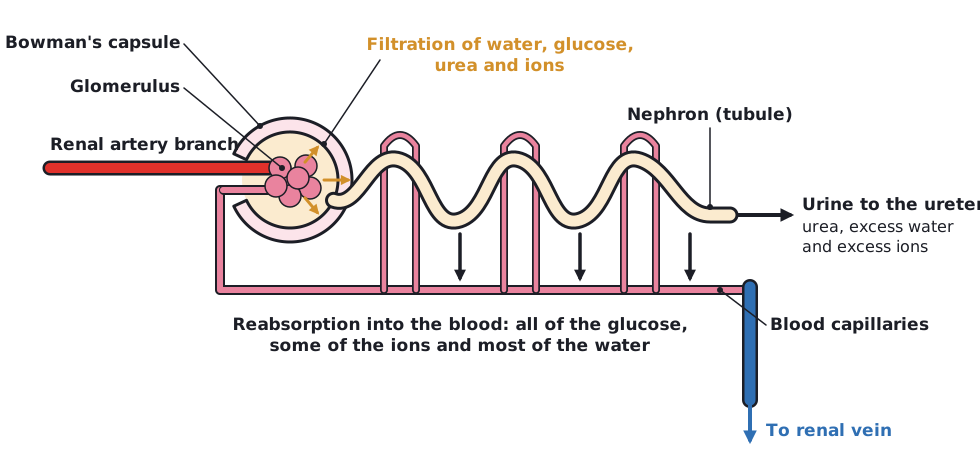
Each kidney contains many tiny tubes called nephrons. A nephron filters the blood and forms urine. Blood enters a knot of capillaries called the glomerulus, which sits inside a cup-shaped Bowman's capsule. The glomerulus is supplied with blood by a branch of the renal artery.
- Filtration (glomerulus): blood in the glomerulus is under high pressure. Water, glucose, urea and ions are forced out of the blood into the nephron. Large molecules such as proteins and blood cells stay in the blood.
- Reabsorption (along the nephron): all of the glucose, some of the ions and most of the water are taken back into the blood.
- Urine formation: what is left in the nephron is urine. It contains urea, excess water and excess ions. It flows to the ureter.
| Substance | Filtered at the glomerulus? | Reabsorbed into the blood? | In urine? |
|---|---|---|---|
| Water | Yes | Most of it | Yes, the excess |
| Glucose | Yes | All of it | No |
| Ions | Yes | Some of them | Yes, the excess |
| Urea | Yes | Some, but much stays in the nephron | Yes |
| Proteins and blood cells | No | Not applicable | No |
 (opens full size in a new tab)
The syllabus asks for an outline only; you do not need the names of the other parts of the nephron. Learn the three ideas: filtration of water, glucose, urea and ions; reabsorption of all glucose, some ions and most water; urine containing urea, excess water and excess ions.
Glucose is filtered out of the blood, then all of it is taken back. Do not say glucose is not filtered. Proteins and blood cells are not filtered.
Written and checked against the Cambridge IGCSE Biology (0610) specification · Updated October 2026