
Coronary heart diseaseSpec 9.2.5, 9.2.6
In short
Coronary heart disease is the blockage of the coronary arteries by fatty deposits, so the heart muscle receives less oxygen and glucose. A complete blockage causes a heart attack. Risk factors include a diet high in saturated fat, lack of exercise, stress, smoking, genetic predisposition, age and sex. A healthier diet and regular exercise reduce the risk.
In coronary heart disease (CHD) the coronary arteries are blocked by fatty deposits. Less blood reaches the heart muscle, so it receives less oxygen and glucose. If an artery is completely blocked, part of the heart muscle cannot get enough oxygen to respire, and a heart attack results.
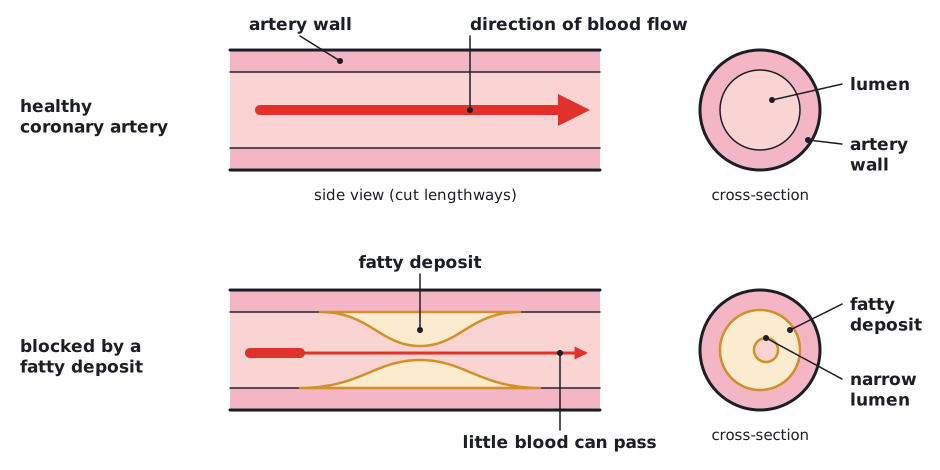 (opens full size in a new tab)
Risk factors
- Diet, especially one high in saturated fat
- Lack of exercise
- Stress
- Smoking
- Genetic predisposition (family history)
- Age (risk increases with age)
- Sex (men are more at risk than women of the same age)
The roles of diet and exercise
| Factor | How it reduces the risk |
|---|---|
| Diet | Eating less saturated fat reduces the fatty deposits in the arteries. Eating less salt and more fruit, vegetables and fibre helps keep the arteries and blood pressure healthy |
| Exercise | Regular exercise strengthens the heart muscle, helps to control body mass and lowers blood pressure, so the risk of blockage is lower |
'Discuss' means give both sides. For diet and exercise, say what each does, and also that other risk factors such as age and genes cannot be changed.
Quick check
Supplement What is the septum?
Show answer
The wall of muscle separating the left and right sides of the heart.
Name the vessels that supply the heart muscle with blood.
Show answer
The coronary arteries.
Supplement Why is the wall of the left ventricle thicker than that of the right ventricle?
Show answer
It pumps blood to the whole body at higher pressure; the right pumps only to the lungs.
State three ways of monitoring the activity of the heart.
Show answer
ECG, pulse rate, listening to the sounds of the valves closing.
State two risk factors for coronary heart disease.
Show answer
Any two of: diet, lack of exercise, stress, smoking, genetic predisposition, age, sex.
Written and checked against the Cambridge IGCSE Biology (0610) specification · Updated October 2026