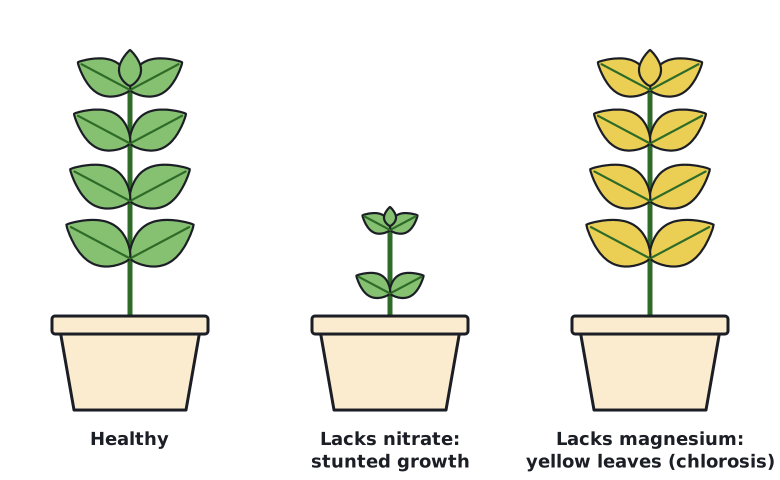
Plants need nitrate ions to make amino acids, which they join to make proteins, and magnesium ions to make chlorophyll. Glucose contains no nitrogen, so nitrate from the soil supplies it. A lack of nitrate causes stunted growth. A lack of magnesium causes chlorosis: the leaves turn yellow because there is less chlorophyll, so less photosynthesis.
Plants also need mineral ions from the soil. Two are named in the syllabus.
Two mineral ions and why plants need them
Ion
Used for
If it is missing
Nitrate ions
Making amino acids. Amino acids contain nitrogen, which glucose does not. Plants join amino acids to make proteins.
Stunted (poor) growth
Magnesium ions
Making chlorophyll. Magnesium is part of every chlorophyll molecule.
Chlorosis: the leaves turn yellow because there is less chlorophyll, so less photosynthesis
Glucose contains only carbon, hydrogen and oxygen. To make amino acids a plant combines the glucose it has made with nitrogen from nitrate ions that its roots absorb from the soil.
Always link the ion to what it is used to make: nitrate to amino acids, magnesium to chlorophyll. Then link to the effect on the plant.
Written and checked against the Cambridge IGCSE Biology (0610) specification · Updated October 2026
Frequently asked questions
What are the products of photosynthesis used for?
The glucose made in photosynthesis is used for respiration, stored as starch, built into cellulose for cell walls, converted to sucrose for transport in the phloem, and used to make nectar to attract insects. Oxygen is released as a by-product. Glucose is also combined with nitrogen from nitrate ions to make amino acids.
How does light intensity affect the rate of photosynthesis?
Supplement As light intensity increases, the rate of photosynthesis increases, because light provides the energy for the process. The rate then levels off, because another factor, such as carbon dioxide concentration or temperature, becomes limiting. You can show this by moving a lamp closer to pondweed and counting the oxygen bubbles released per minute.
How does temperature affect the rate of photosynthesis?
Supplement As temperature rises, the rate of photosynthesis increases up to an optimum, because photosynthesis is controlled by enzymes and molecules move faster with more collisions. Above the optimum, the rate falls sharply because the enzymes are denatured. On a cold bright day, temperature is likely to be the limiting factor.

 (opens full size in a new tab)