

Antigens, antibodies and active immunitySpec 10.1.6, 10.1.7, 10.1.8, 10.1.9, 10.1.10
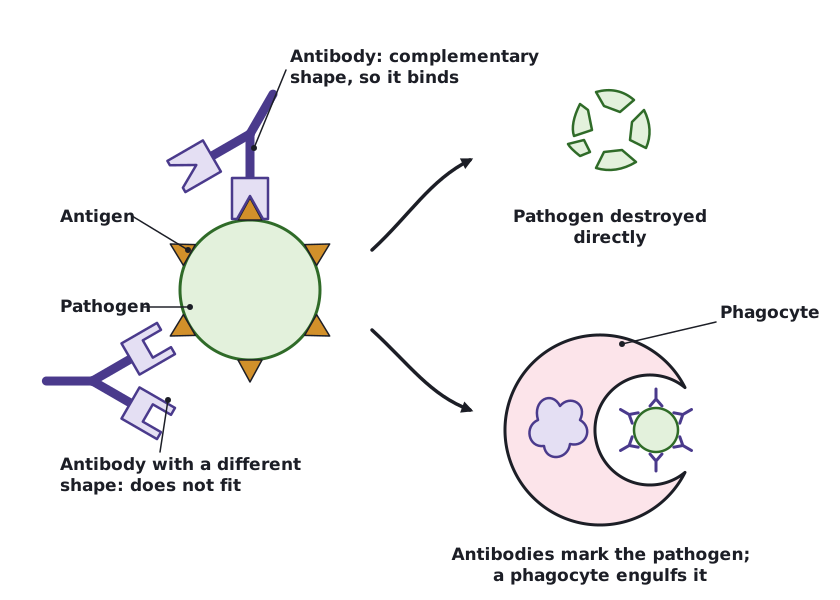
Each pathogen has its own antigens. Antigens are molecules on the surface of the pathogen, and they have specific shapes.
Antibodies are proteins made by white blood cells (lymphocytes). An antibody has a shape that is complementary to one specific antigen, so it fits that antigen and no others. This means that a different antibody is needed for each pathogen.
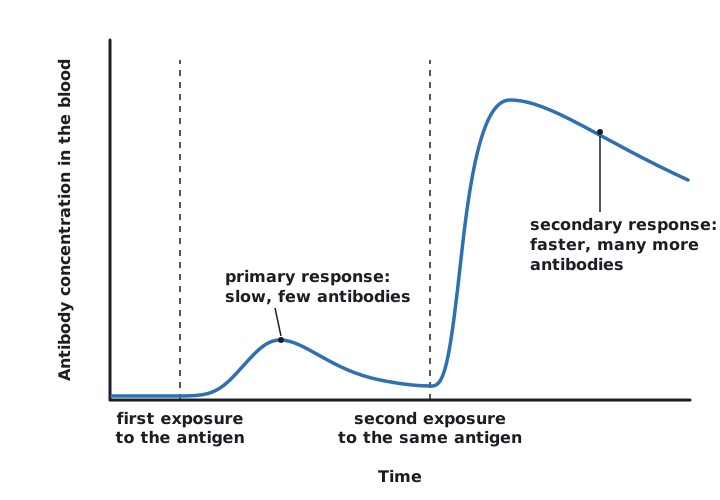
Antibodies bind to antigens. This leads to either direct destruction of the pathogens or marking of the pathogens so that phagocytes destroy them.
Active immunity is defence against a pathogen by antibody production in the body. It is gained in two ways:
- after an infection by a pathogen (the body makes antibodies and recovers)
- by vaccination
 (opens full size in a new tab)
 (opens full size in a new tab)
Exam tip:
Use the word 'complementary' for the shape of antibody and antigen. An antibody is specific to one antigen.