

Sexual reproductionSpec 16.2.1, 16.2.2, 16.2.3, 16.2.4
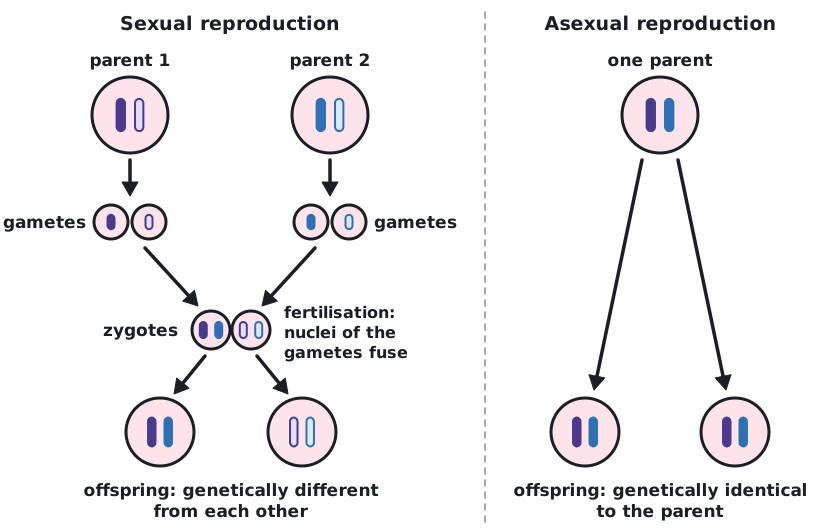
Sexual reproduction is a process involving the fusion of the nuclei of two gametes to form a zygote and the production of offspring that are genetically different from each other. Gametes are the sex cells: sperm and egg cells in animals, and pollen nuclei and egg cells in flowering plants.
Fertilisation is the fusion of the nuclei of gametes. The gametes usually come from two parents, so the offspring inherit a mixture of genetic information from both of them.
- Sexual reproduction
- A process involving the fusion of the nuclei of two gametes to form a zygote and the production of offspring that are genetically different from each other.
- Fertilisation
- The fusion of the nuclei of gametes.
| Sexual reproduction | Asexual reproduction | |
|---|---|---|
| Number of parents | Usually two | One |
| Gametes and fusion of nuclei | Yes | No |
| Offspring | Genetically different from each other | Genetically identical to the parent |
 (opens full size in a new tab)
Supplement (what this means)
Supplement: only for the Extended papers (2 and 4). Core students can skip it. What the labels meanHaploid and diploid nuclei
Supplement (what this means)
Supplement: only for the Extended papers (2 and 4). Core students can skip it. What the labels meanThe nuclei of gametes are haploid: they contain a single set of chromosomes. The nucleus of a zygote is diploid: it contains two sets of chromosomes, one set from each parent. Fertilisation therefore restores the full (diploid) number of chromosomes.
Supplement (what this means)
Supplement: only for the Extended papers (2 and 4). Core students can skip it. What the labels meanAdvantages and disadvantages of sexual reproduction
Supplement (what this means)
Supplement: only for the Extended papers (2 and 4). Core students can skip it. What the labels mean| Advantages | Disadvantages | |
|---|---|---|
| To a population of a species in the wild | The offspring show genetic variation. If the environment changes, or a new disease appears, some individuals may survive and reproduce. This gives the population a better chance of adapting through natural selection. | Two parents are needed, so a mate must be found. It takes more time and energy. Fewer offspring are usually produced than by asexual reproduction, and the population increases more slowly. |
| To crop production | Variation can produce new varieties of crop, for example plants with higher yield or disease resistance. Some plants in the crop may survive a disease or pest that kills others. | The crop plants are not uniform, so size, yield and quality vary. Plants with the best features cannot be copied exactly. It is usually slower than asexual reproduction. |
Cambridge definitions are marked word for word. Learn 'fusion of the nuclei of gametes' for fertilisation, and 'genetically different from each other' for the offspring of sexual reproduction.
Quick check
Define asexual reproduction.
Show answer
A process resulting in the production of genetically identical offspring from one parent.
Name two examples of asexual reproduction in plants.
Show answer
Strawberry runners, potato tubers or daffodil bulbs.
Define fertilisation.
Show answer
The fusion of the nuclei of gametes.
Are the offspring of sexual reproduction identical to each other?
Show answer
No, they are genetically different from each other.
Supplement State whether the nucleus of a zygote is haploid or diploid.
Show answer
Diploid.