
The test crossSpec 17.4.13
In short
A test cross finds the unknown genotype of an organism showing the dominant phenotype by crossing it with a homozygous recessive individual. If any offspring show the recessive phenotype, the unknown parent must be heterozygous, giving about 1 : 1. If all offspring show the dominant phenotype, the unknown parent is probably homozygous dominant.
An organism with the dominant phenotype can be homozygous dominant (TT) or heterozygous (Tt). You cannot tell which by looking at it. A test cross finds out the unknown genotype.
- Cross the organism of unknown genotype with a homozygous recessive individual (tt).
- Collect the offspring and record their phenotypes. A large number of offspring gives a more reliable result.
- Compare the offspring with the expected results.
| Unknown parent | Cross | Offspring |
|---|---|---|
| Homozygous dominant (TT) | TT × tt | All Tt: all tall |
| Heterozygous (Tt) | Tt × tt | 1 Tt : 1 tt: about 1 tall : 1 short |
If any offspring show the recessive phenotype, the unknown parent must have been heterozygous, because each parent gave the offspring one recessive allele. If all the offspring show the dominant phenotype, the unknown parent is probably homozygous dominant.
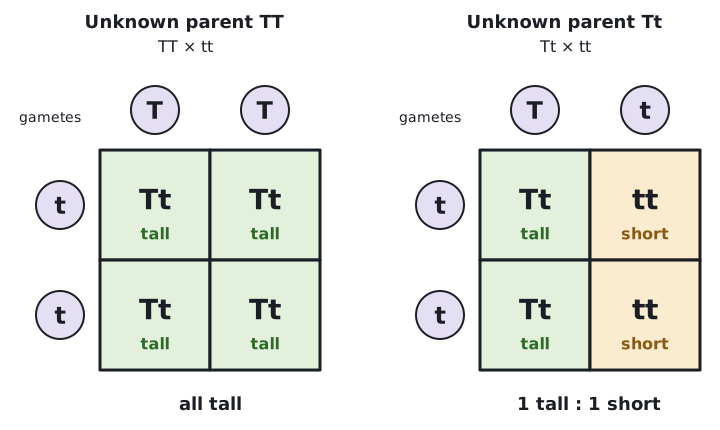 (opens full size in a new tab)
The tester is always homozygous recessive, because its phenotype tells you its genotype. Say that the offspring show whether the unknown parent has a recessive allele.
Written and checked against the Cambridge IGCSE Biology (0610) specification · Updated October 2026