
The pupil reflexSpec 14.2.4, 14.2.5
In short
The pupil reflex is an automatic response that changes the diameter of the pupil when light intensity changes. In bright light the pupil constricts, letting in less light and protecting the retina. In dim light it dilates, letting in more light. The iris has antagonistic muscles: circular muscles contract to narrow the pupil and radial muscles contract to widen it.
The pupil reflex changes the diameter of the pupil when the light intensity changes. It is an automatic response, which protects the retina and lets enough light in to see.
| Bright light | Dim light | |
|---|---|---|
| Pupil diameter | Gets smaller (constricts) | Gets larger (dilates) |
| Amount of light entering the eye | Less | More |
| Effect | Protects the retina from damage | Allows more light to reach the retina so you can see better |
Supplement (what this means)
Supplement: only for the Extended papers (2 and 4). Core students can skip it. What the labels meanAntagonistic muscles in the iris
Supplement (what this means)
Supplement: only for the Extended papers (2 and 4). Core students can skip it. What the labels meanThe iris contains two sets of muscles that work against each other. These are antagonistic muscles. Circular muscles form rings around the pupil. Radial muscles run outwards like the spokes of a wheel.
Supplement (what this means)
Supplement: only for the Extended papers (2 and 4). Core students can skip it. What the labels mean| Bright light | Dim light | |
|---|---|---|
| Circular muscles | Contract | Relax |
| Radial muscles | Relax | Contract |
| Pupil | Constricts (narrower) | Dilates (wider) |
Supplement (what this means)
Supplement: only for the Extended papers (2 and 4). Core students can skip it. What the labels mean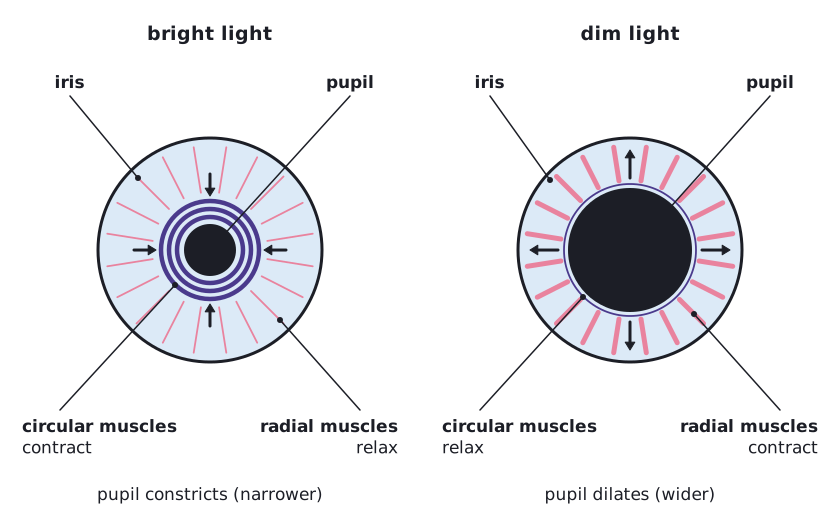 (opens full size in a new tab)
Supplement (what this means)
Supplement: only for the Extended papers (2 and 4). Core students can skip it. What the labels meanRadial muscles contract to make the pupil wider. Circular muscles contract to make it narrower. Always say which set contracts and which relaxes.
Written and checked against the Cambridge IGCSE Biology (0610) specification · Updated October 2026