

Reflex actions and reflex arcsSpec 14.1.5, 14.1.6
- Reflex action
- A means of automatically and rapidly integrating and coordinating stimuli with the responses of effectors (muscles and glands).
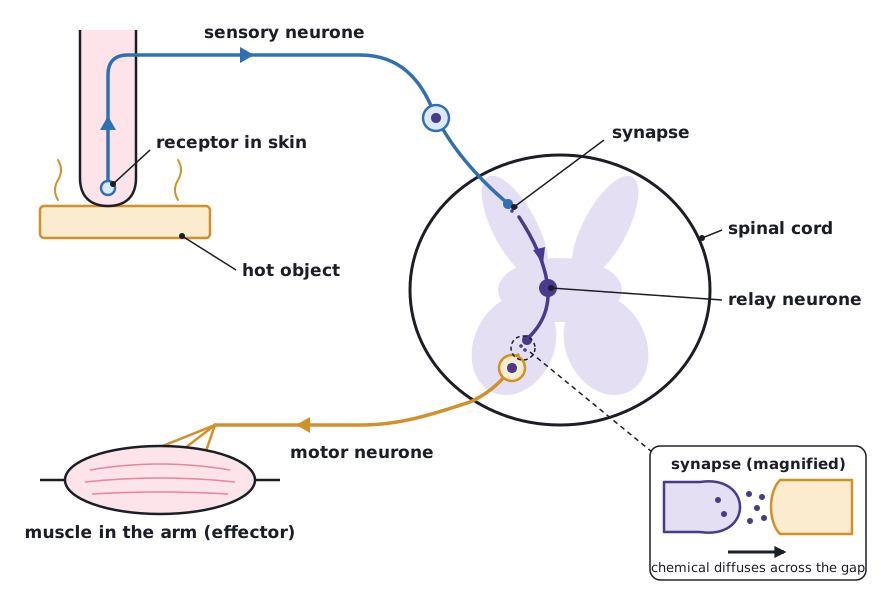
A reflex action is automatic and rapid. You do not have to think about it first. Reflexes protect the body from harm, for example pulling your hand away from something hot.
A simple reflex arc is the pathway that the impulses follow. It has five parts: receptor, sensory neurone, relay neurone, motor neurone and effector.
| Part | Function |
|---|---|
| Receptor | Detects the stimulus and starts an impulse |
| Sensory neurone | Carries impulses from the receptor to the CNS |
| Relay neurone | Carries impulses within the CNS from the sensory neurone to the motor neurone |
| Motor neurone | Carries impulses from the CNS to the effector |
| Effector | A muscle (contracts) or a gland (secretes) that produces the response |
 (opens full size in a new tab)
Exam tip:
Describe the pathway in order and name each part. If asked why a reflex is useful, use the words ‘rapid’, ‘automatic’ and ‘protects the body from harm’.