
Book a tutor

Components of blood

Transport in animals · Blood · note 1 of 2

Components of bloodSpec 9.4.1, 9.4.2, 9.4.3

In short

Blood is made of red blood cells, white blood cells, platelets and plasma. Red blood cells have no nucleus and contain haemoglobin, which combines with oxygen to transport it. White blood cells defend against pathogens by phagocytosis and antibody production. Platelets help blood to clot, and plasma transports cells, ions, nutrients, urea, hormones and carbon dioxide.

Blood is made of red blood cells, white blood cells, platelets and plasma. Plasma is the liquid part.
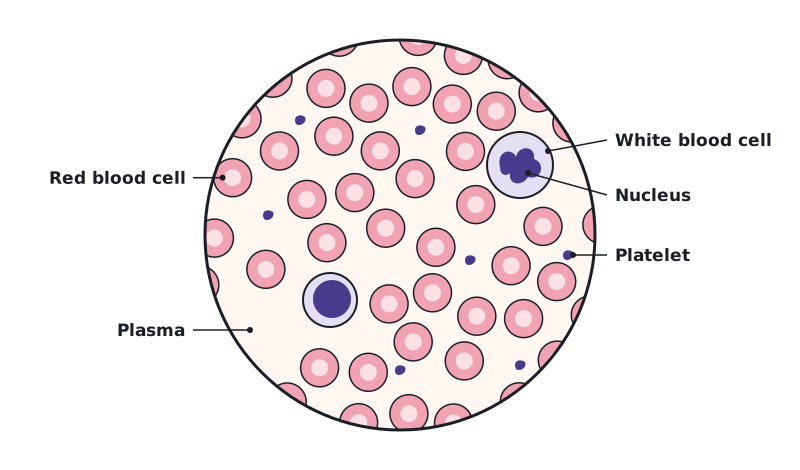
A stained blood smear showing many red blood cells with pale centres, white blood cells with purple-stained nuclei, tiny platelets and the plasma around them. (opens full size in a new tab)
Red blood cells are the most numerous. White blood cells have a nucleus. Platelets are tiny fragments.
  • Red blood cells are small, round and pale in the middle, with no nucleus.
  • White blood cells are larger and have a nucleus, usually stained dark.
  • Platelets are tiny fragments of cells.
Functions of the components of blood
ComponentFunction
Red blood cellsTransport oxygen. They contain the red pigment haemoglobin, which combines with oxygen
White blood cellsDefend against pathogens by phagocytosis and antibody production
PlateletsHelp blood to clot
PlasmaTransports blood cells, ions, nutrients, urea, hormones and carbon dioxide
Exam tip:

Name the pigment. 'Red blood cells carry oxygen' is not enough: say the oxygen is carried by haemoglobin. Clotting details are not required for platelets.

Written and checked against the Cambridge IGCSE Biology (0610) specification · Updated October 2026

Frequently asked questions

What are the four components of blood and their functions?

Blood is made of red blood cells, white blood cells, platelets and plasma. Red blood cells transport oxygen using haemoglobin. White blood cells defend against pathogens by phagocytosis and antibody production. Platelets help blood to clot. Plasma, the liquid part, transports blood cells, ions, nutrients, urea, hormones and carbon dioxide.

How do red blood cells carry oxygen?

Red blood cells carry oxygen using haemoglobin, a red pigment that combines with oxygen. Red blood cells are small, round and pale in the middle, with no nucleus. In an exam, saying 'red blood cells carry oxygen' is not enough: say that the oxygen is carried by haemoglobin.

How do white blood cells fight infection?

Supplement White blood cells defend the body against pathogens in two ways. Phagocytes, which have a lobed nucleus, engulf pathogens by phagocytosis. Lymphocytes, which have a large round nucleus filling most of the cell, produce antibodies. Antibodies bind to antigens on pathogens, which leads to their destruction.

All 4 questions on Blood