
Photosynthesis and chlorophyllSpec 6.1.1, 6.1.2, 6.1.3, 6.1.4, 6.1.10
In short
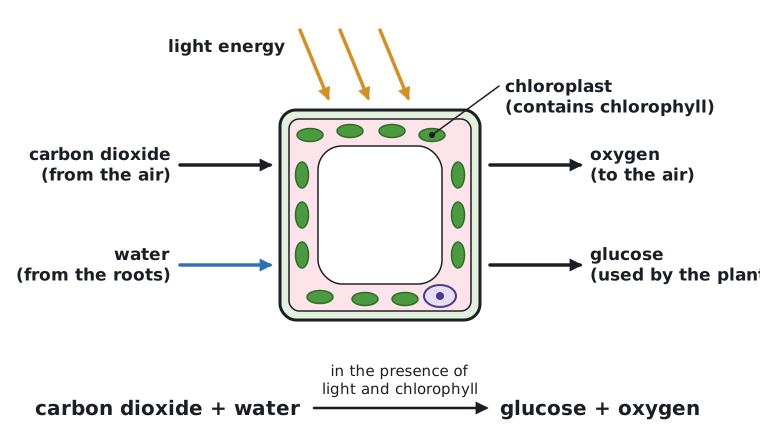
Photosynthesis is the process by which plants synthesise carbohydrates from raw materials using energy from light. The word equation is carbon dioxide + water → glucose + oxygen, in the presence of light and chlorophyll. Chlorophyll is a green pigment in chloroplasts that absorbs light and transfers energy from light into energy in chemicals.
Photosynthesis is the process by which plants synthesise carbohydrates from raw materials using energy from light. The raw materials are carbon dioxide and water. The carbohydrate made is glucose, and oxygen is released as a by-product.
- Photosynthesis
- the process by which plants synthesise carbohydrates from raw materials using energy from light
- Chlorophyll
- a green pigment found in chloroplasts that transfers energy from light into energy in chemicals, for the synthesis of carbohydrates
The word equation for photosynthesis is:
This happens in the presence of light and chlorophyll. Light and chlorophyll are written above the arrow because they are needed for the reaction but are not raw materials.
| Requirement | Where it comes from |
|---|---|
| Carbon dioxide | The air, entering the leaf through the stomata |
| Water | The soil, absorbed by the roots and carried to the leaf in the xylem |
| Light | The Sun (or another light source) |
| Chlorophyll | Chloroplasts in the plant cells |
Chlorophyll and chloroplasts
Chlorophyll is a green pigment that is found in chloroplasts. It absorbs light.
Chlorophyll transfers energy from light into energy in chemicals, for the synthesis of carbohydrates. The energy from light ends up stored as chemical energy in glucose.
Supplement (what this means)
Supplement: only for the Extended papers (2 and 4). Core students can skip it. What the labels meanThe balanced chemical equation
Supplement (what this means)
Supplement: only for the Extended papers (2 and 4). Core students can skip it. What the labels meanThe balanced chemical equation shows how many molecules of each substance take part. Six molecules of carbon dioxide and six of water make one molecule of glucose and six of oxygen.
Supplement (what this means)
Supplement: only for the Extended papers (2 and 4). Core students can skip it. What the labels meanWrite light and chlorophyll over the arrow. Do not write them as raw materials on the left. Cambridge asks for the phrase 'in the presence of light and chlorophyll'.
Do not say chlorophyll 'makes' energy. It transfers energy from light into chemical energy in the carbohydrate.
 (opens full size in a new tab)
Written and checked against the Cambridge IGCSE Biology (0610) specification · Updated October 2026