

Ferns, monocots and dicotsSpec 1.3.5
The plant kingdom contains two groups that you need to know: ferns and flowering plants. Flowering plants are split again into monocotyledons (monocots) and dicotyledons (dicots).
| Group | Main features |
|---|---|
| Ferns | Leaves called fronds; have roots, stems and leaves; no flowers; reproduce using spores, made on the underside of the fronds, not seeds |
| Flowering plants | Produce flowers; reproduce using seeds, which form inside the ovary of the flower |
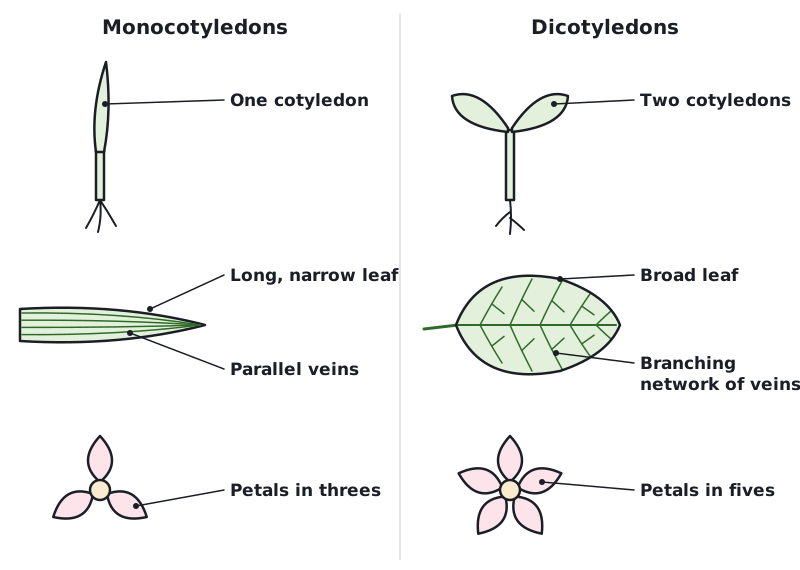
Monocotyledons and dicotyledons
| Feature | Monocotyledons | Dicotyledons |
|---|---|---|
| Cotyledons (seed leaves) | One | Two |
| Leaf veins | Parallel | Branching network |
| Leaf shape | Usually long and narrow | Usually broad |
| Flower parts | In threes or multiples of three | In fours or fives, or multiples of four or five |
| Examples | Grasses, wheat, maize | Beans, sunflower, oak |
 (opens full size in a new tab)
Exam tip:
Count the cotyledons first, because that gives the group its name. Leaf vein pattern is the quickest feature to use when you are shown a leaf.