
Structure of an insect-pollinated flowerSpec 16.3.1, 16.3.2
In short
An insect-pollinated flower has a male part, the stamen, and a female part, the carpel. The anther in the stamen produces pollen grains containing the male gametes, and the filament holds it up. The stigma receives pollen, the style holds it up, and the ovary contains ovules, which develop into seeds after fertilisation. Petals attract insects.
You must be able to identify, and draw, the parts of an insect-pollinated flower, and state what each part does. The stamen is the male part and the carpel is the female part.
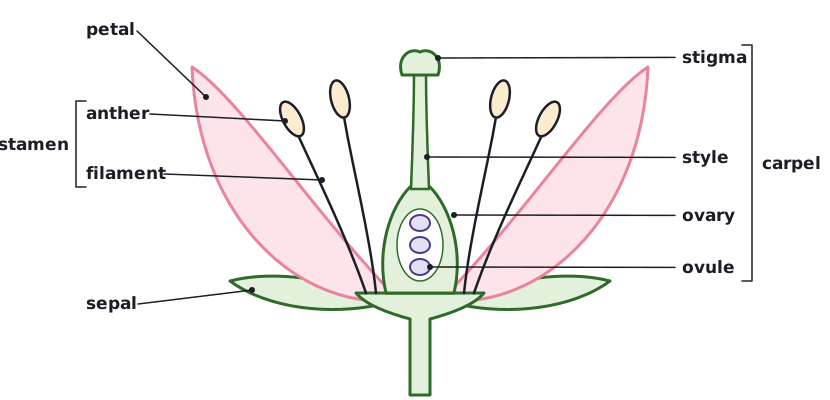 (opens full size in a new tab)
| Part | Function |
|---|---|
| Sepal | Protects the flower in the bud |
| Petal | Brightly coloured, to attract insects |
| Stamen | Male part of the flower; made of an anther and a filament |
| Anther | Produces pollen grains, which contain the male gametes |
| Filament | Holds the anther up |
| Carpel | Female part of the flower; made of the stigma, style, ovary and ovules |
| Stigma | Receives pollen grains; often sticky so that pollen grains stay on it |
| Style | Holds up the stigma |
| Ovary | Contains the ovules |
| Ovule | Contains the female gamete (egg cell); after fertilisation it develops into a seed |
The anther makes the pollen. The stigma only receives it. Do not mix up the stamen (male) and the carpel (female).
When you draw a flower, use a sharp pencil and a single clear line. Draw it large, do not shade, and label with straight lines that do not cross. Label every part in the list above.
Written and checked against the Cambridge IGCSE Biology (0610) specification · Updated October 2026