
SynapsesSpec 14.1.7, 14.1.8, 14.1.9, 14.1.10
In short
A synapse is a junction between two neurones. The electrical impulse cannot cross the synaptic gap, so an impulse arriving at the first neurone releases neurotransmitter molecules from vesicles. These diffuse across the gap and bind with receptor proteins on the next neurone, stimulating a new impulse. Synapses ensure that impulses travel in one direction only.
- Synapse
- A junction between two neurones.
There is a tiny gap between one neurone and the next. The electrical impulse cannot cross this gap, so a chemical is used instead.
Supplement (what this means)
Supplement: only for the Extended papers (2 and 4). Core students can skip it. What the labels meanStructure of a synapse
Supplement (what this means)
Supplement: only for the Extended papers (2 and 4). Core students can skip it. What the labels mean- Vesicles in the first neurone contain neurotransmitter molecules.
- The synaptic gap separates the two neurones.
- The membrane of the next neurone has receptor proteins.
Supplement (what this means)
Supplement: only for the Extended papers (2 and 4). Core students can skip it. What the labels meanEvents at a synapse
Supplement (what this means)
Supplement: only for the Extended papers (2 and 4). Core students can skip it. What the labels mean- An impulse arriving at the end of the first neurone stimulates the release of neurotransmitter molecules from vesicles into the synaptic gap.
- The neurotransmitter molecules diffuse across the gap.
- The neurotransmitter molecules bind with receptor proteins on the next neurone.
- An impulse is then stimulated in the next neurone.
Supplement (what this means)
Supplement: only for the Extended papers (2 and 4). Core students can skip it. What the labels mean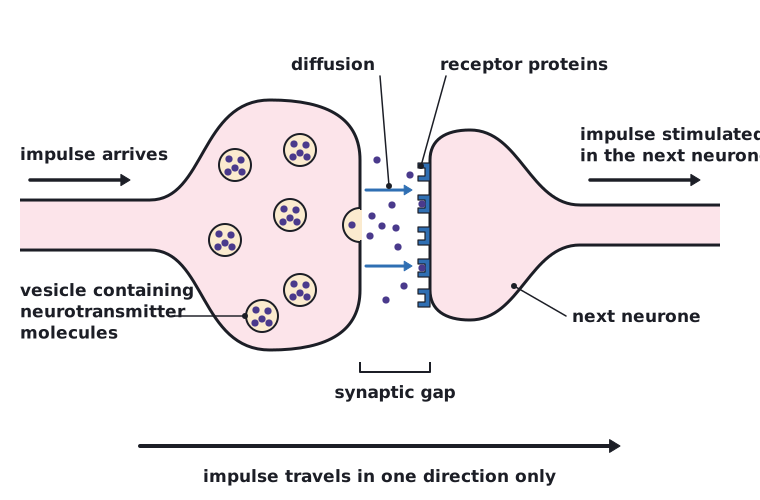 (opens full size in a new tab)
Supplement (what this means)
Supplement: only for the Extended papers (2 and 4). Core students can skip it. What the labels meanSynapses ensure that impulses travel in one direction only. Neurotransmitter is released from only one side of the gap, and the receptor proteins are only on the next neurone.
Supplement (what this means)
Supplement: only for the Extended papers (2 and 4). Core students can skip it. What the labels meanThe impulse itself does not cross the gap. The neurotransmitter diffuses across and starts a new impulse in the next neurone.
Quick check
What does the central nervous system consist of?
Show answer
The brain and the spinal cord.
Which neurone is found entirely within the CNS?
Show answer
The relay neurone.
Name the five parts of a simple reflex arc in order.
Show answer
Receptor, sensory neurone, relay neurone, motor neurone, effector.
What is a synapse?
Show answer
A junction between two neurones.
Supplement What diffuses across the synaptic gap?
Show answer
Neurotransmitter molecules.
Written and checked against the Cambridge IGCSE Biology (0610) specification · Updated October 2026