

Transpiration pull and wiltingSpec 8.3.5, 8.3.7
How water moves up the xylem
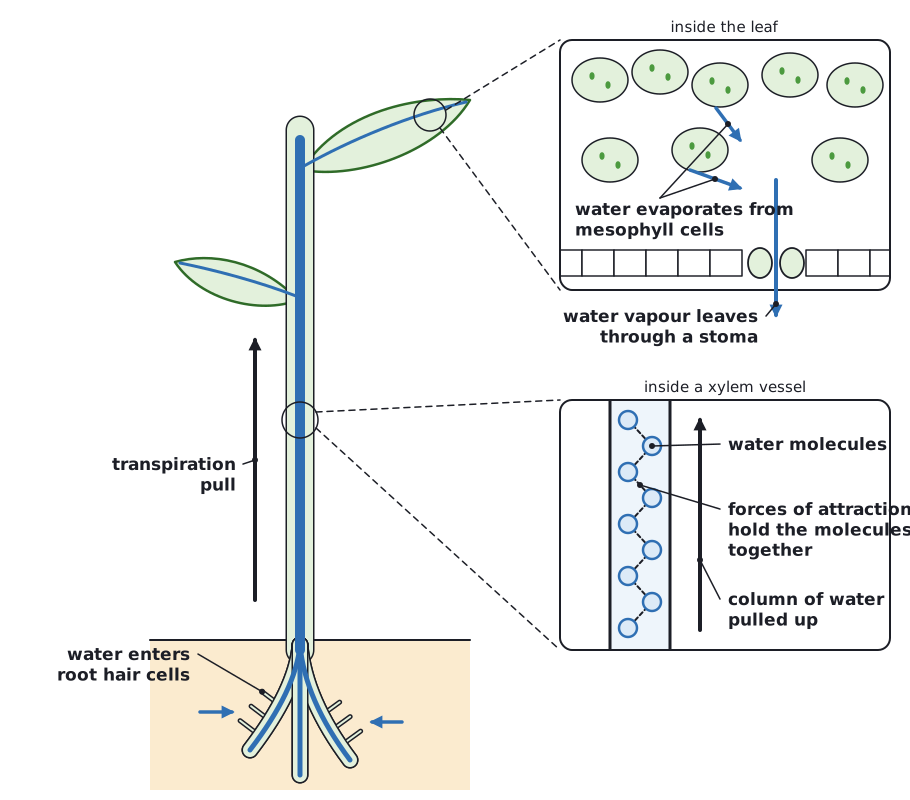
Water is lost from the mesophyll cells by evaporation. This pulls more water out of the xylem to replace it. This pull is called the transpiration pull.
The pull is passed down the xylem because water molecules are attracted to each other. These forces of attraction hold the water molecules together as a continuous column of water, so the whole column is drawn up the xylem, from the roots to the leaves.
- Water evaporates from the surface of the mesophyll cells and diffuses out through the stomata.
- Water is drawn out of the xylem to replace it. This is the transpiration pull.
- The water molecules are held together by forces of attraction, so the column of water is pulled up the xylem.
- More water enters the root to replace it.
 (opens full size in a new tab)
Wilting
Wilting happens when a plant loses water by transpiration faster than it can take water up from the soil. Water leaves the cells by osmosis, so the cells lose their turgor (they become flaccid). The cells no longer press against each other, so the leaves and stems are not supported and droop.
- Wilting is more likely in hot, dry or windy conditions, because transpiration is fast.
- Wilting also happens when the soil is dry, because there is little water to take up.
- When water uptake is greater than water loss again, the cells take in water, become turgid and the plant recovers.
Explain wilting in terms of cells: water loss means the cells lose turgor (become flaccid), so the plant loses its support and droops.
Quick check
Define transpiration.
Show answer
The loss of water vapour from leaves.
Name two factors that increase the rate of transpiration when they increase.
Show answer
Temperature and wind speed.
Supplement How does higher humidity affect the rate?
Show answer
It slows transpiration, because the concentration gradient is less steep.
Supplement What holds the water column together in the xylem?
Show answer
Forces of attraction between water molecules.