
Insect- and wind-pollinated flowersSpec 16.3.3, 16.3.4, 16.3.7
In short
Insect-pollinated and wind-pollinated flowers are adapted to different ways of carrying pollen. Insect-pollinated flowers have large, brightly coloured petals, nectar and larger, sticky or spiky pollen. Wind-pollinated flowers, such as grasses, have small dull petals, anthers and feathery stigmas hanging outside the flower, and very large numbers of small, light, smooth pollen grains.
Flowers are adapted to be pollinated either by insects or by wind. Their structures differ in ways you can see and describe.
Wind-pollinated flowers
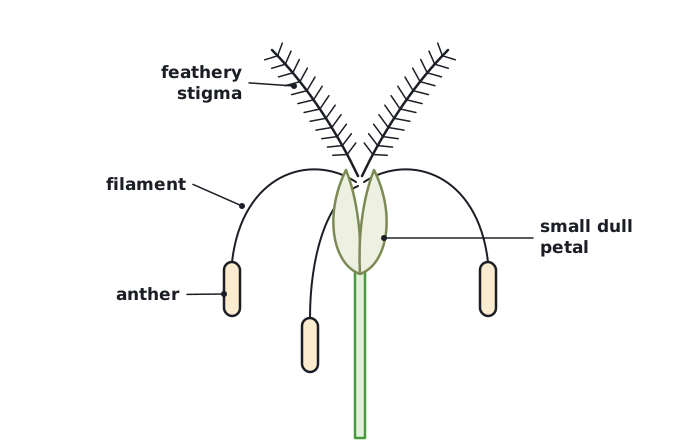
In a wind-pollinated flower, such as a grass, the anthers hang outside the flower on long filaments, where the wind can blow the pollen away. The stigmas are large and feathery and also hang outside the flower, to catch pollen grains carried in the air.
 (opens full size in a new tab)
Pollen grains
| Insect-pollinated | Wind-pollinated | |
|---|---|---|
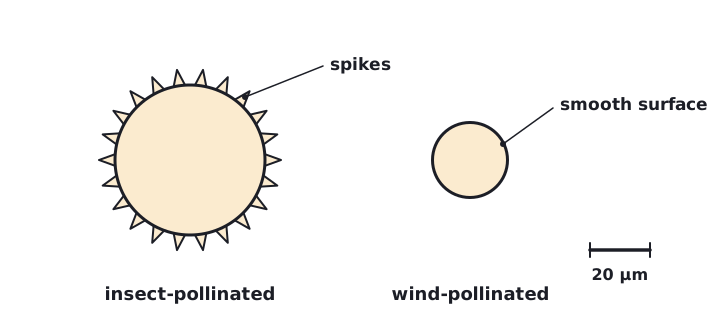
| Size and mass | Larger and heavier | Small and light, so they are carried easily by the wind |
| Surface | Sticky or with spikes or hooks, so they stick to insects | Smooth and not sticky, so they separate easily and are blown away by the wind |
| Number made | Fewer | Very large numbers, because most pollen does not reach another flower |
 (opens full size in a new tab)
Adaptations of the flowers
| Feature | Insect-pollinated flower | Wind-pollinated flower |
|---|---|---|
| Petals | Large, brightly coloured, often scented, to attract insects | Small, dull, green or absent; there is no need to attract insects |
| Nectar | Produced, as food for insects | Not produced |
| Anthers | Inside the flower, positioned so that insects brush against them | Hanging outside the flower, so the wind blows the pollen away |
| Stigma | Inside the flower, small and sticky, positioned so insects brush against it | Large and feathery, hanging outside the flower, to catch pollen from the air |
Always link a feature to its job. 'Feathery stigma' scores less than 'feathery stigma gives a large surface area to catch pollen from the wind'.
Written and checked against the Cambridge IGCSE Biology (0610) specification · Updated October 2026