

Populations, communities and ecosystemsSpec 19.4.1, 19.4.2, 19.4.3, 19.4.4
- Population
- A group of organisms of one species, living in the same area, at the same time.
- Community
- All of the populations of different species in an ecosystem.
- Ecosystem
- A unit containing the community of organisms and their environment, interacting together.
| Level | Meaning | Pond example |
|---|---|---|
| Organism | A single living thing | One frog |
| Population | One species, in the same area, at the same time | All the frogs in the pond |
| Community | All the populations of different species in the ecosystem | All the plants, animals and microorganisms in the pond |
| Ecosystem | The community and its environment, interacting together | The pond community plus the water, light and temperature |
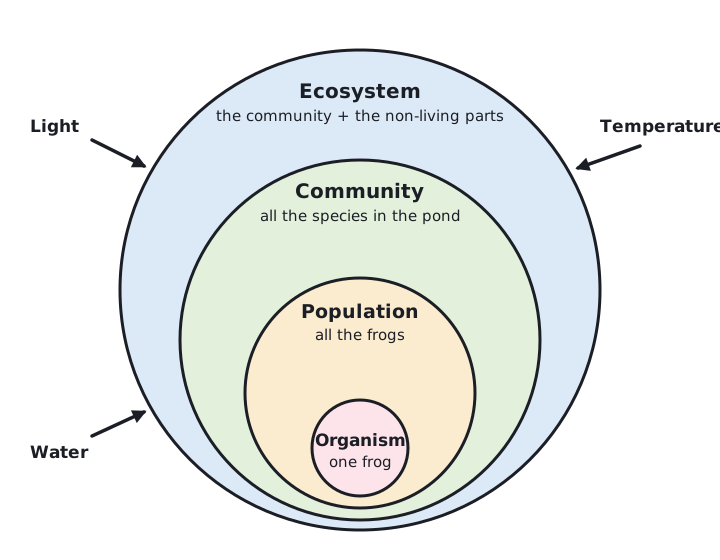 (opens full size in a new tab)
Factors affecting the rate of population growth
The rate at which a population grows depends on four factors: food supply, competition, predation and disease.
| Factor | Effect on population growth |
|---|---|
| Food supply | More food means more organisms survive and reproduce, so the population grows faster. Less food slows growth or makes the population fall. |
| Competition | Organisms compete for limited resources such as food, water, light and space. The more competition, the slower the growth. |
| Predation | Predators eat prey, so more predators slow the growth of the prey population. |
| Disease | Pathogens can kill or weaken organisms, so disease slows growth or reduces numbers. |
Common mistake:
A population is one species only. If an answer includes different species living together, it is describing a community. Always include 'at the same time' in the definition of a population.